But it is fundamentally reckless advice for anyone with a bank balance under seven/eight figures. Let me tell you something.
Billionaires giving career advice are speaking from ₹100 crores in the bank. Their vantage point is their current life stage. Their advice isn't wrong, but it may lack context and might not work at your stage.


Why Do We Admire Steve Jobs?

Steve Jobs didn't just have a "passion." When he left Reed College, he came from a stable family and stayed in Silicon Valley's growing tech ecosystem. He had access to engineers like Steve Wozniak, early tech communities, and eventually investor backing. Most dropouts don't drop into that kind of network and opportunity.
When a billionaire says "Take the risk," they are the one person who won the lottery. They don't tell you about the 99,999 others who followed their passion and ended up broke, because those people don't get invited to give commencement speeches.
The reason their advice fails is because of Economic Friction. If you have no safety net, a single failure can set you back a decade.
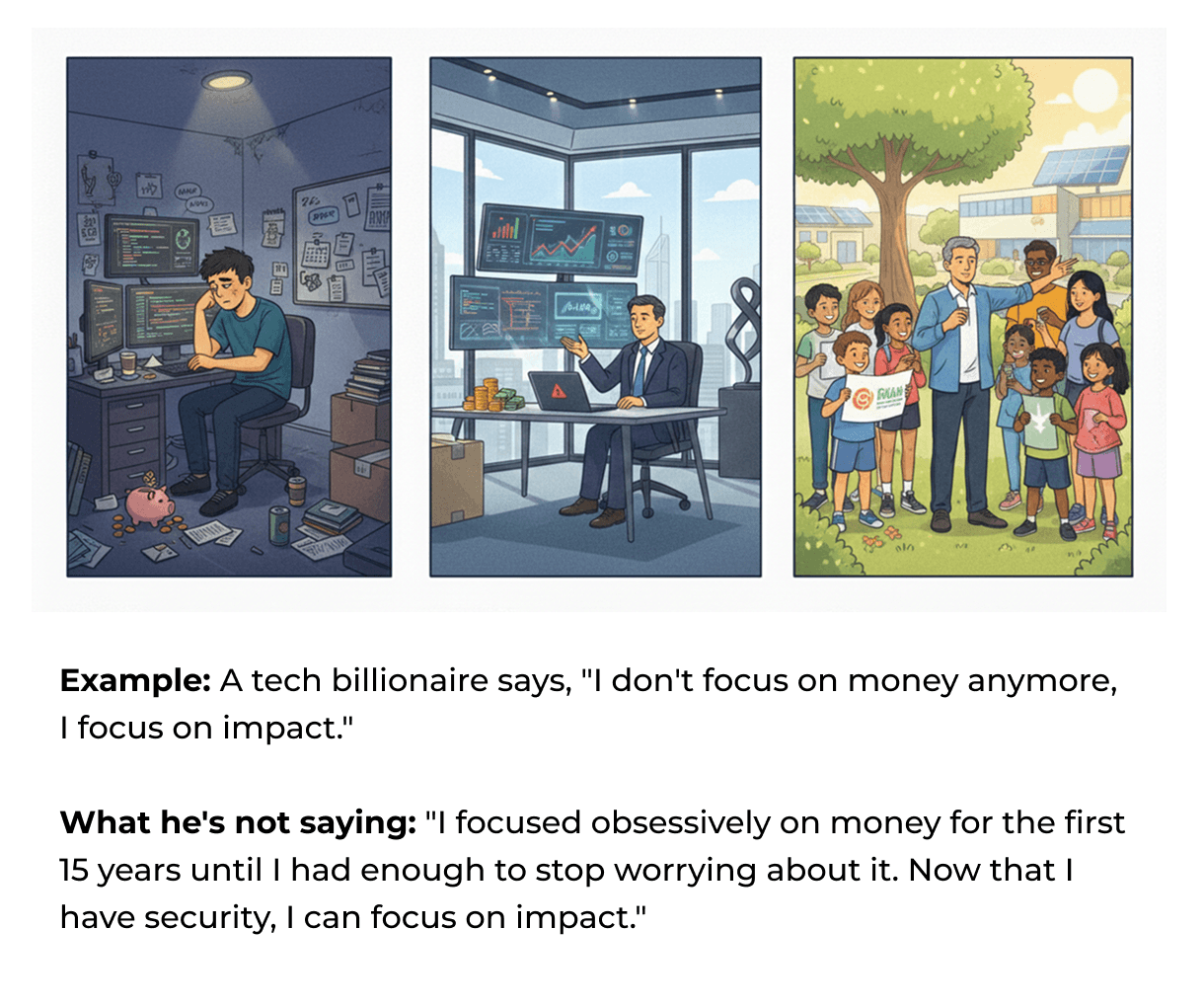
Following "passion" when your Risk Capacity is low is gambling with your life.
The Stock Broking Billionaire Example

A famous billionaire stockbroker once said don't buy houses, they're terrible investments, rent instead. Later, he himself bought property. Funny how that works.
His reality is that he could buy a ₹100-200 crore house with cash tomorrow if he wanted. For him, houses aren't investments; they're just expenses he doesn't need because he already has infinite housing security.
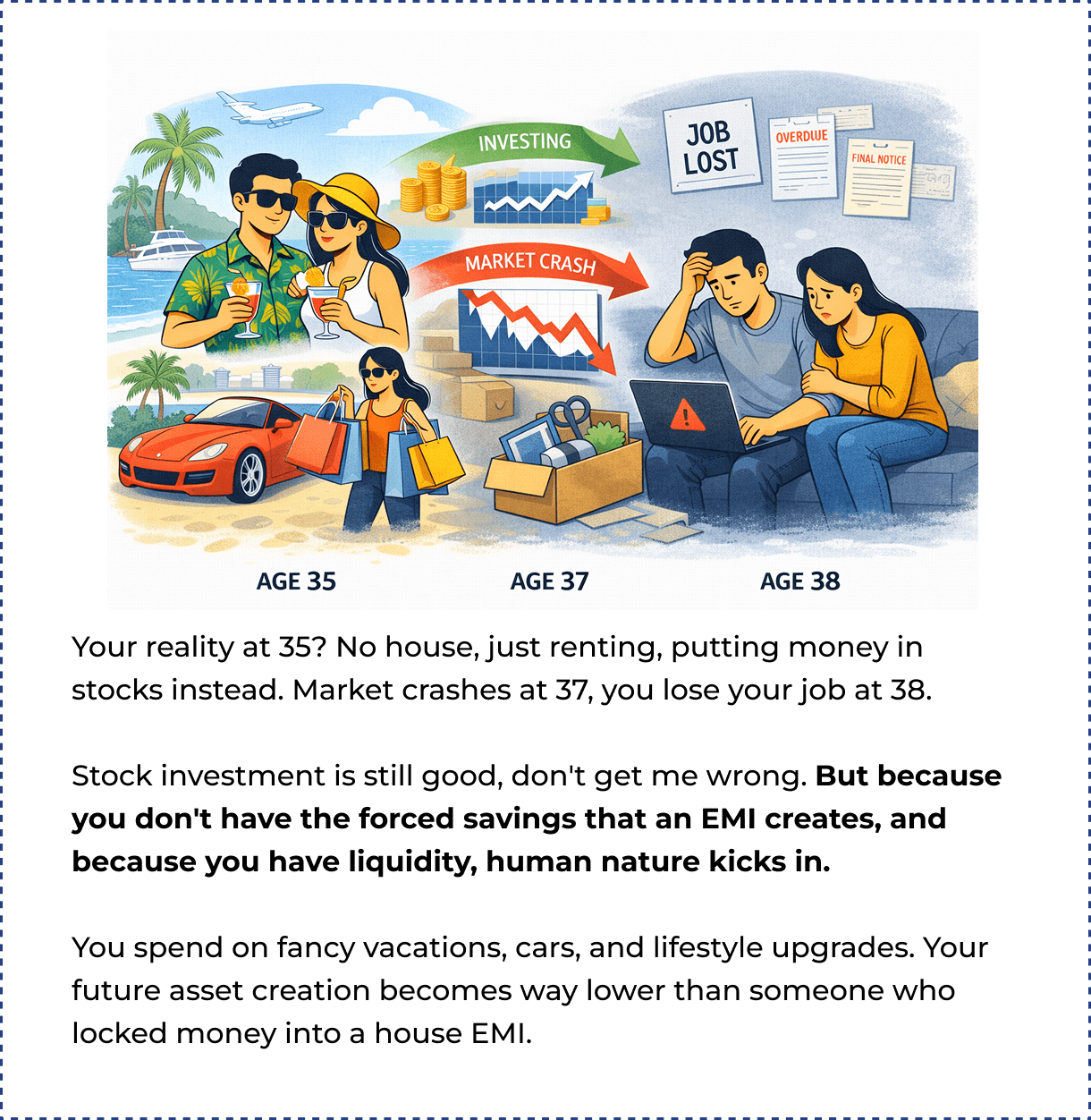
The billionaire can afford market crashes and lifestyle creep. You can't. They're optimizing for maximum ROI. You should be optimizing for resilience and forced discipline.
- They are optimizing for ROI (Return on Investment).
- You should be optimizing for ROR (Return on Resilience).
Read Morgan Housel's Psychology of Money for more on this. He explains the human behaviour side of finance better than anyone.
The Question People Get Wrong

Here's the thing. People ask billionaires, "how did you become a billionaire?" That's the right question. Valuable information about their journey.
But then people look at what billionaires are doing NOW, after becoming billionaires, and think "I should do that too." That's the wrong takeaway.
What they're doing at the destination is completely different from what they did on the journey. We're copying destination behavior and trying to apply it to journey decisions.
The Context Nobody Mentions

All advice is contextual. It depends on:
- Your age
- Your savings
- Your responsibilities
- Your risk tolerance
- Your safety net
Billionaire advice often ignores all of that because billionaires don't have those constraints anymore.
"Follow your passion" at different stages:
With ₹5 crores in the bank and low expenses, you can spend years pursuing passion projects that don't make money because you don't need them to make money. At 24 with ₹2 lakhs savings and parents to support - Your passion is travel photography, and it takes five years to make decent money? You're going to starve in year two.
Better advice at that stage?
Build your passion on weekends. Find a middle path that combines passion with pay. Combine what you enjoy with what pays. Don't wait for the perfect passion job; create a hybrid that works.
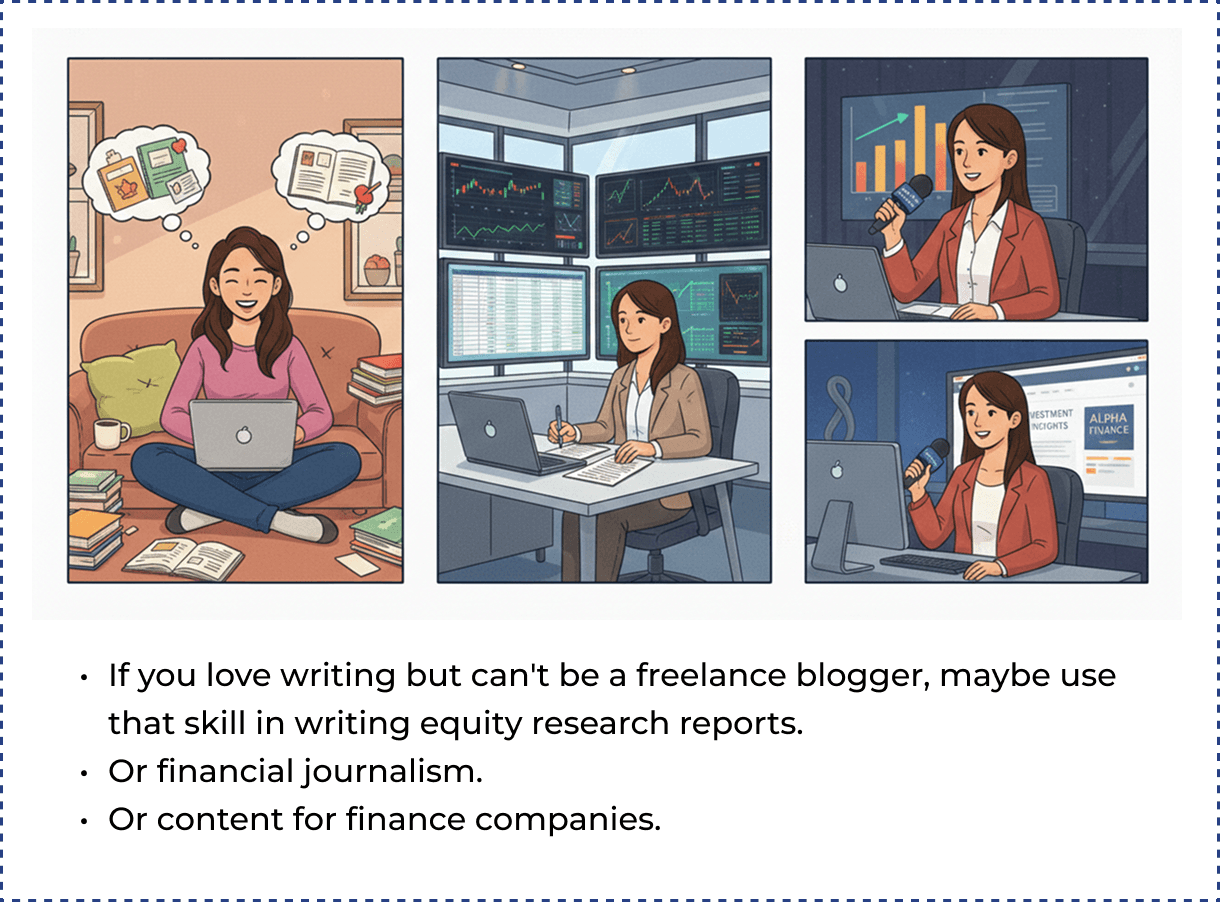
What Worked For Me At Each Stage

Let me be very honest about my own journey, because this is real talk students need.
Stage 1 - Building credentials (early 20s): Focused on education obsessively. CA, CS, then more certifications. This wasn't just passion. This was building leverage and specialization that became part of my job later.
Stage 2 - Corporate job plus weekend teaching (mid 20s): Did a good job during the week, taught on weekends. Only after seeing this work did I take the informed decision to quit my job. And I quit while my dad was still working, so there was some family financial backup.
Stage 3 - Starting full-time teaching (late 20s): First three years were challenging, trying to earn what I was making in my corporate job. I did so much cold calling, cold emailing, sales stuff I wasn't good at. Multiple income streams until teaching became stable.
Stage 4 - Building the business (30s): Kept my lifestyle in check because that increases savings. I was building my own runway without fundraising. Build for students, not for VCs who'll push you to optimize for growth over quality.
Stage 5 - Scaling (now): Only now, with a stable 110-person team and consistent revenue, can I think about "impact over money" or "passion projects." Because the foundation is solid.
Build security first, then pursue passion. Not sexy advice, but this really, really works.
What This Means For You

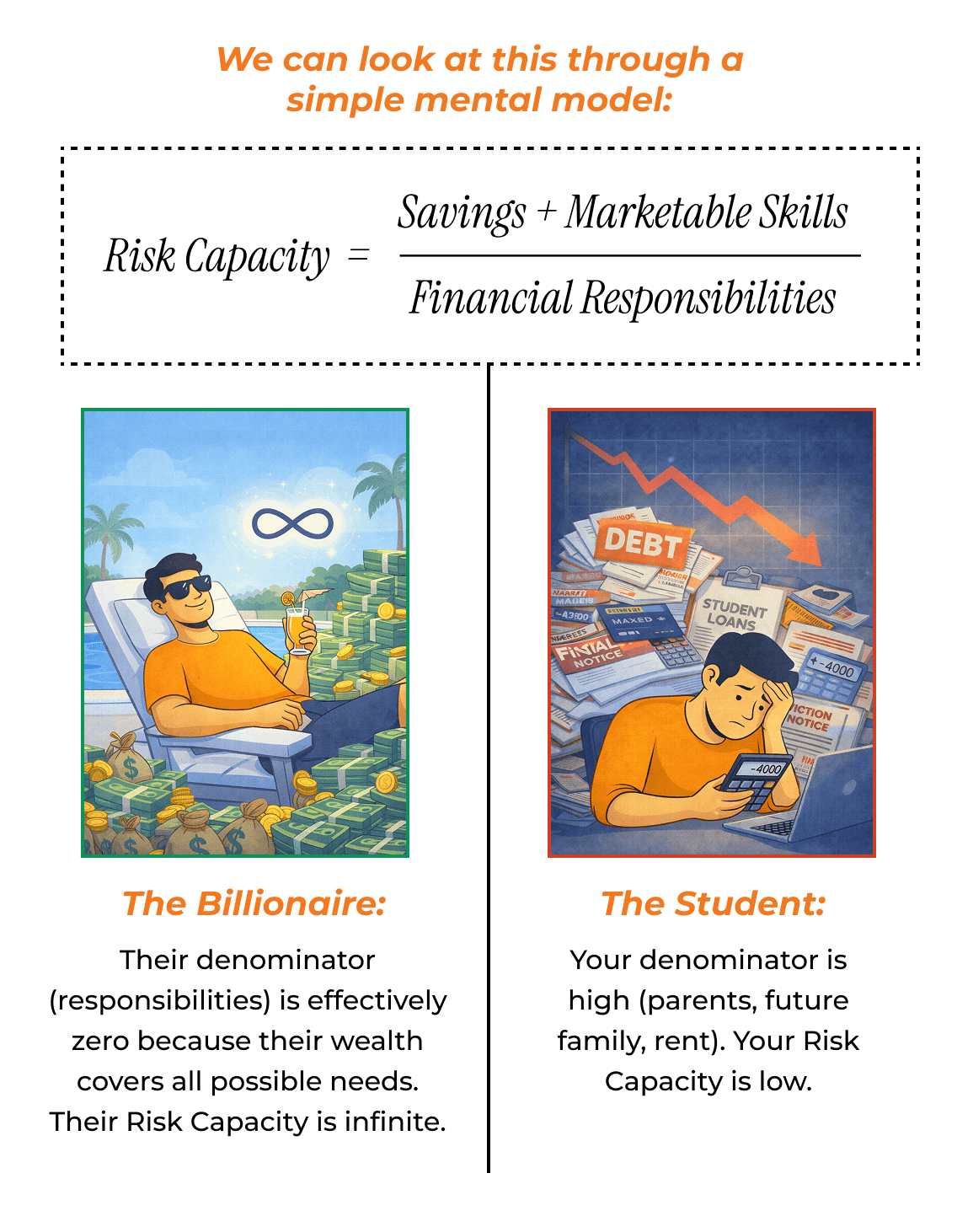
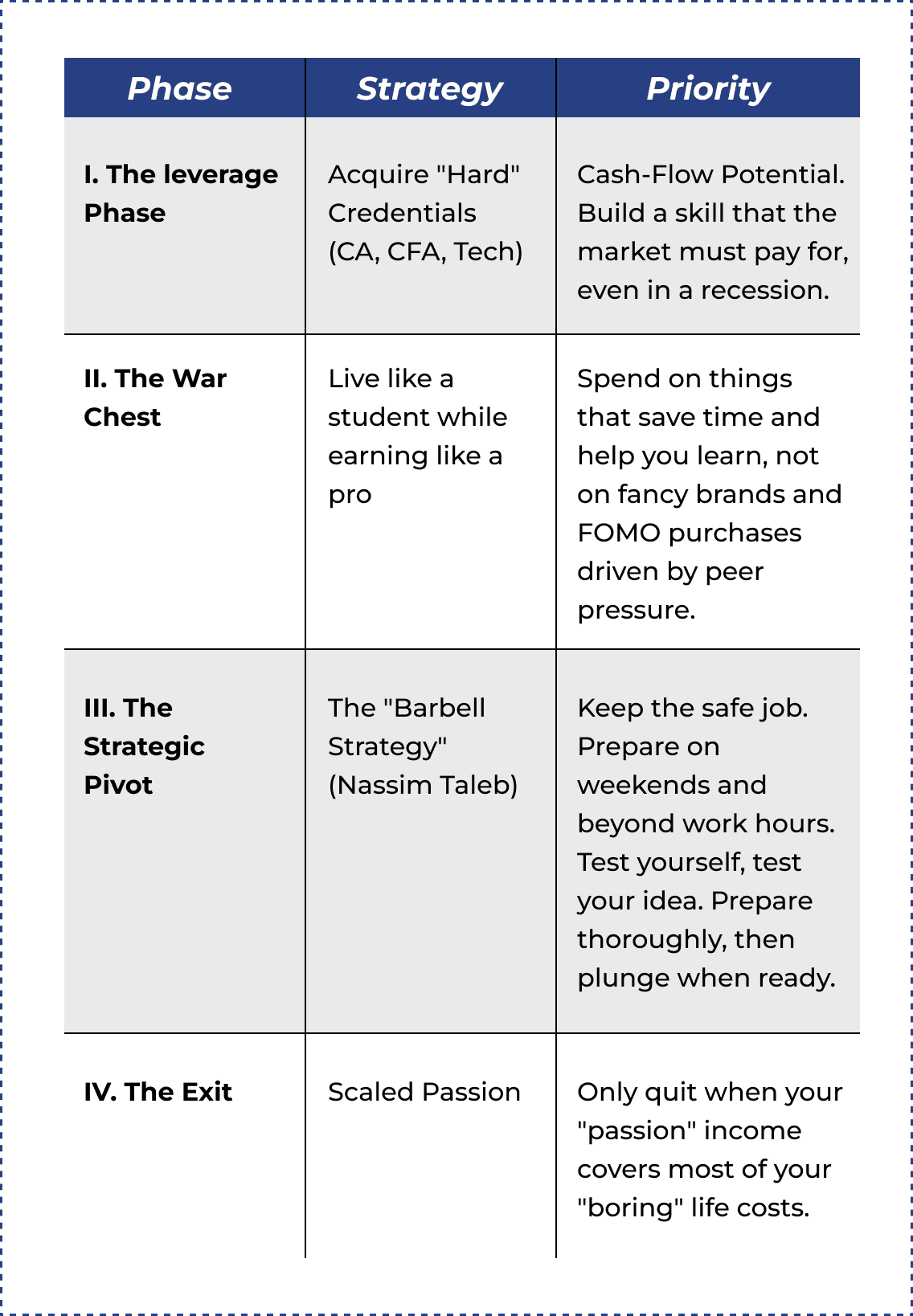
Stop taking advice from people who don't remember your stage anymore. They're well-meaning but fundamentally disconnected from your reality. If you're in your 20s with limited savings, we can look at this through a simple mental model:
Instead of the "Passion First" model, look at the "Capital-Skill Pipeline." This is how wealth is actually built without a safety net.
The Bottom Line
At times, billionaires make terrible mentors because they're giving you destination advice when you need journey advice. You need advice from people who remember your stage. Who built without a safety net? Who knows what it's like to have family depending on you?
That advice will be less inspiring. More practical. It'll tell you to build security before taking leaps. Focus on foundations before dreams. But it'll actually work. And working beats inspiring every single time.
Invest in yourself,
Aswini Bajaj