But there are physical cues, literal observations, and small details that predict operational results better than any structured question.
This week, I'm sharing the hiring signals nobody talks about because they're uncomfortable to admit. Some of these I've observed myself over 13 years. Some are patterns that others have identified that might be helpful for your next interview.

The Handshake That Reveals Everything

People practice their resumes. They practice their answers. Nobody practices their handshake because they think it doesn't matter. It does.
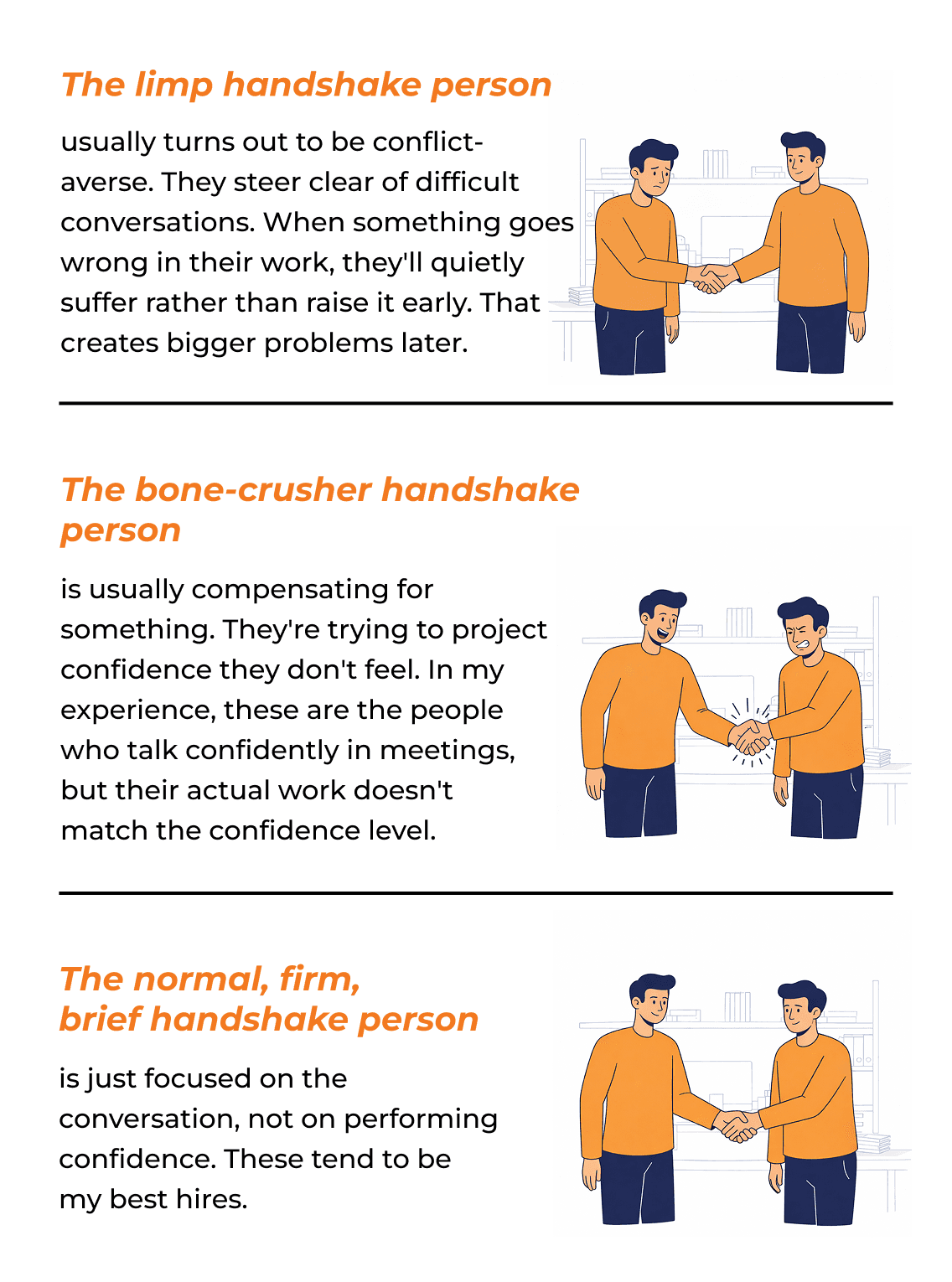
There's another thing some people notice - eye contact during a handshake. Some candidates make eye contact during the handshake, some don't. The ones who don't are either nervous or they're not really present in the moment.
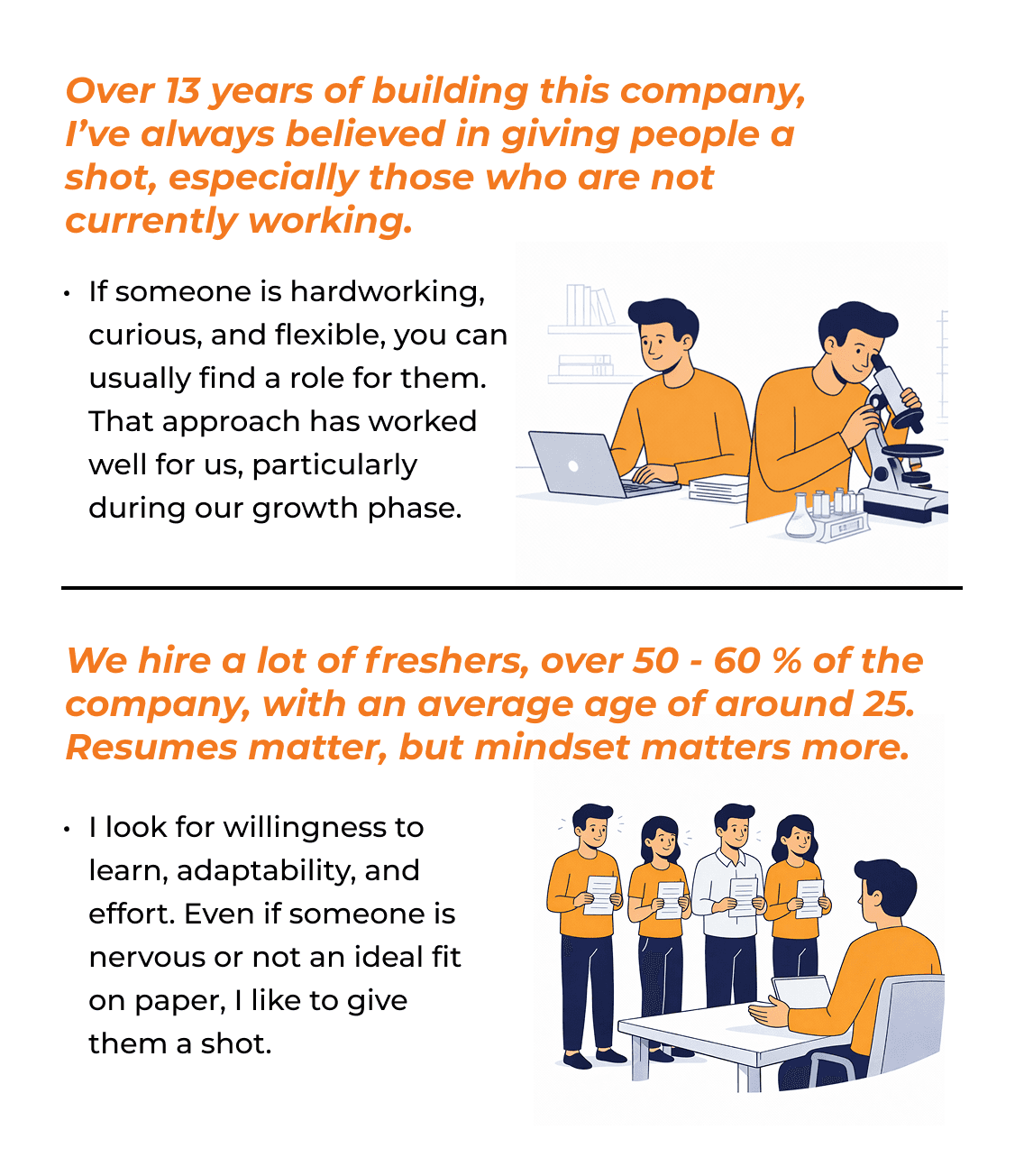
But I believe in giving chances to nervous people. Some candidates don't have exposure or upbringing from certain schools and colleges and may lack some soft skills, but they can do well. They need to be groomed. I love to groom people who join my team, provided they're willing to learn and willing to work very, very hard.
What They Do With Their Hands

I don't mean nervous fidgeting. Everyone's nervous in an interview. I mean, what they do when they're explaining something.
People who talk with their hands while explaining concepts tend to think in systems and connections. They're visualizing what they're saying. These people are usually good at explaining things to students.
People who keep their hands still or in their lap while talking tend to think more linearly. They're good at process work, following systems, and executing consistently. But they struggle with improvisation. Neither is better. I'm just noticing what the role needs.
- For teaching roles, I want the hand talkers.
- For operations roles, I want the still hands people.
There's a third type that's a red flag. People who touch their face constantly while answering questions, especially covering their mouth or touching their nose. Some say these people are either lying or don't believe what they're saying themselves. This is one thing I have often read in research papers.
How They Enter The Room
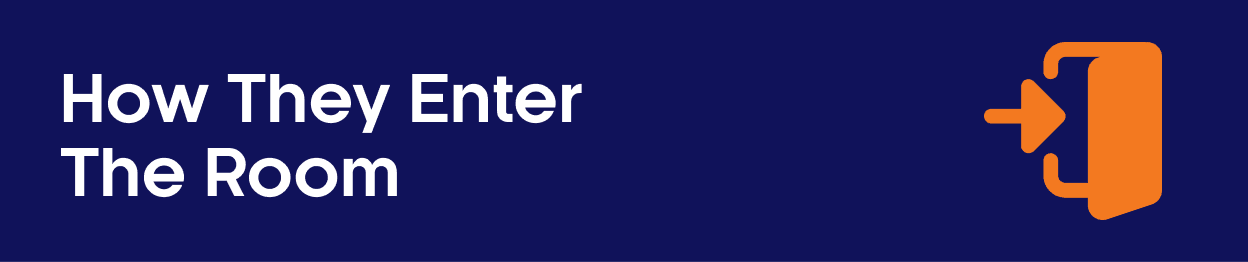
This happens in the first 3 seconds before anyone says anything.
The Question They Ask About The Office

At some point in the interview, I walk candidates around the office. Everyone asks questions. What they ask reveals what they actually care about.
- "What do I need to learn?" or "How do I do better?" - This question is excellent. Shows a learning mindset.
- "Joining date" - For freshers, this tells me how much they value time. If they say "let me arrange things at my household for one or two weeks," it means they will take a lot of personal day-offs.
- "What are the work hours?" signals they're optimizing for a balanced lifestyle. Not bad, but they won't be the person volunteering for pressing weekend work.
- "Who would I work with directly?" signals they care about team dynamics. These people are usually collaborative.
- "What's the growth path at AB?" signals ambition but also potential flight risk. They'll work hard but exit faster.
- No questions whatsoever about the office signals they're just happy to have an appointment letter. Often grateful and loyal but might not have high standards for themselves.
What This Means For Hiring

HR departments would hate this. It opens you up to unconscious bias. Certainly true. But I'm already biased. Everyone is. HRs and people might be tracking these things. So be conscious of what signals you're sending in interviews, even unconsciously.
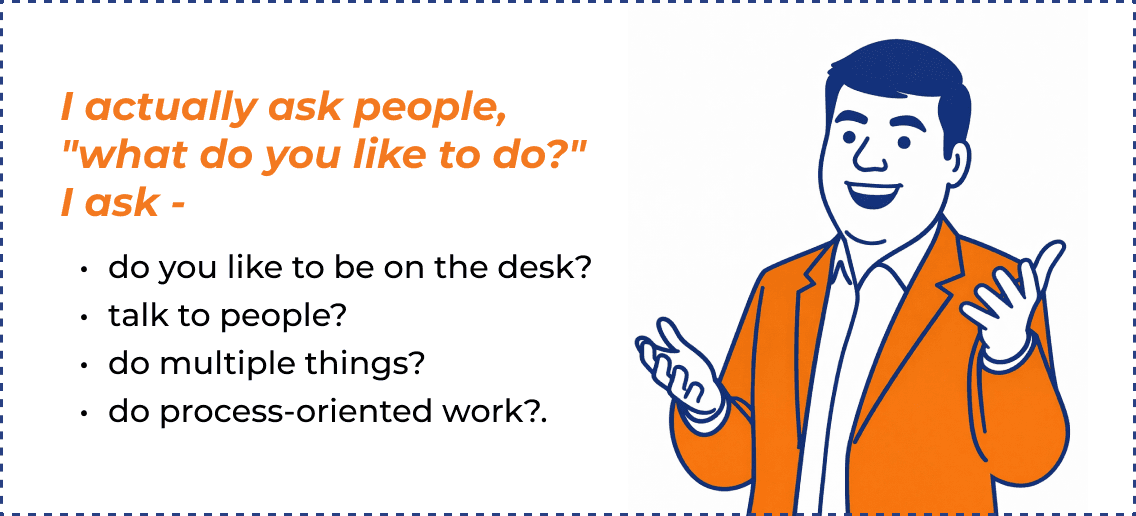
I ask them what they like, and as a result, I want to give them a role, because then they obviously do better.
Hiring is a very important function. These observations - handshakes, how people enter rooms, questions they ask - they matter. Not as the sole criterion, but as one input among many.
Because hiring is too important to rely solely on what people say, you need to pay attention to what they show, even when they don't realize they're showing it.
The Bottom Line
In 13 years of building this company, I've learned that one of the leading hiring signals is often the one nobody's paying attention to. While everyone's focused on degrees and years of experience, I'm noticing whether someone makes eye contact during a handshake.
It sounds superficial. Maybe it is. But it works. And in hiring, who you actually are matters more than your resume.
Until next week,
Aswini Bajaj