It's the most practical question for their careers, yet it's treated like a taboo. Let me tell you what happened that made me address this with my students.


The Question Nobody Asks
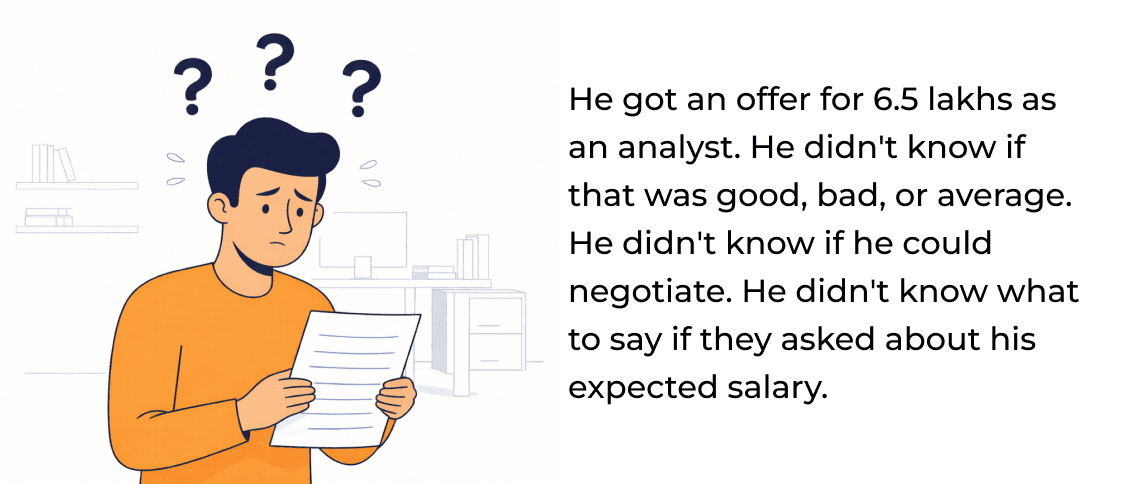
Two years ago, a student stayed back after class. He waited until everyone left, then came up to me nervously.
"Bhaiya, can I ask you something? It's not about CFA."
"Of course, go ahead."
"How much should I ask for? In salary, I mean. I got a job offer, but I don't know if it's good or bad. And I can't ask my parents because they don't know this industry. I can't ask my friends because everyone lies about their salary."
This student had cleared CFA Level 1. He had just completed his graduation. He could do basic DCF calculations. He understood equity portfolios and fundamental analysis. But he couldn't figure out the most basic career question. How much is my work worth? And he felt shy of asking it.
Why We Don't Talk About Salaries

There's this weird thing that happens in education. We teach you everything except how to actually judge your remuneration.
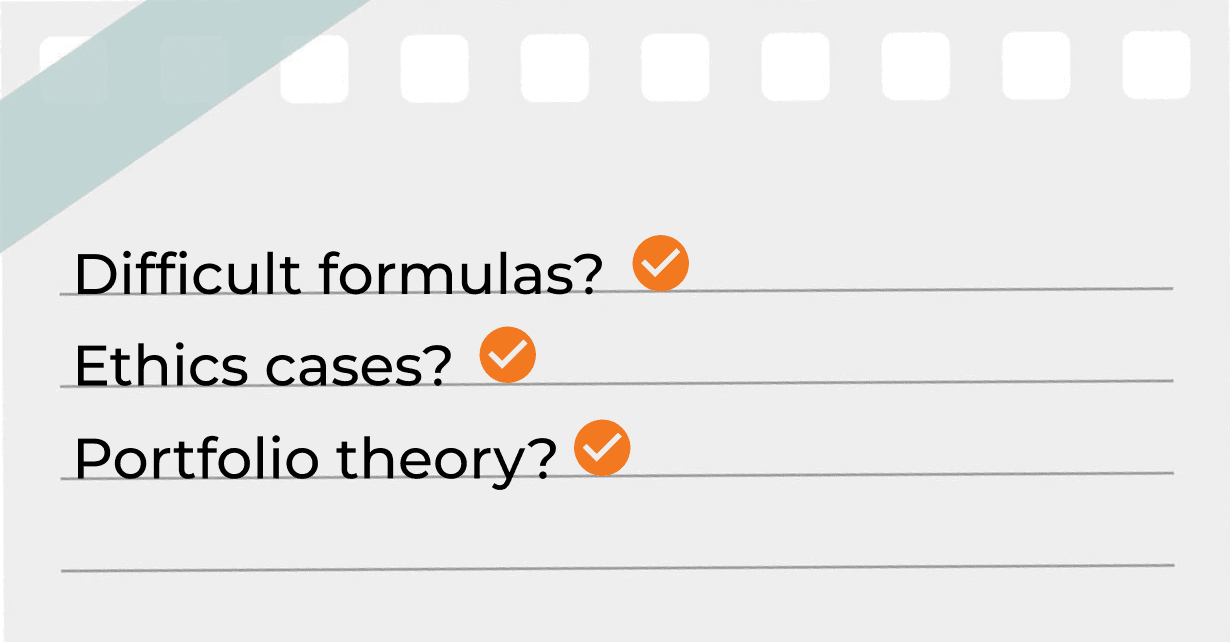
- We teach you to analyze a company's financials. We don't teach you to analyze your own job offer.
- We teach you portfolio theory. We don't teach you salary negotiation.
- We teach you about market efficiency. We don't teach you that the job market is incredibly inefficient, and you can use that.
Why? Because talking about salary feels uncomfortable. It gives you apprehensions of being called out as impatient, materialistic, or greedy. So we sidestep it. We pretend that if you just work hard and do good work, fair compensation will automatically follow.
That's not true. Fair compensation comes to people who know how to ask for it, know what to ask for, and know how to negotiate without destroying the relationship.
As Napoleon Hill writes in Think and Grow Rich, you must first ask yourself: what am I bringing to the table?
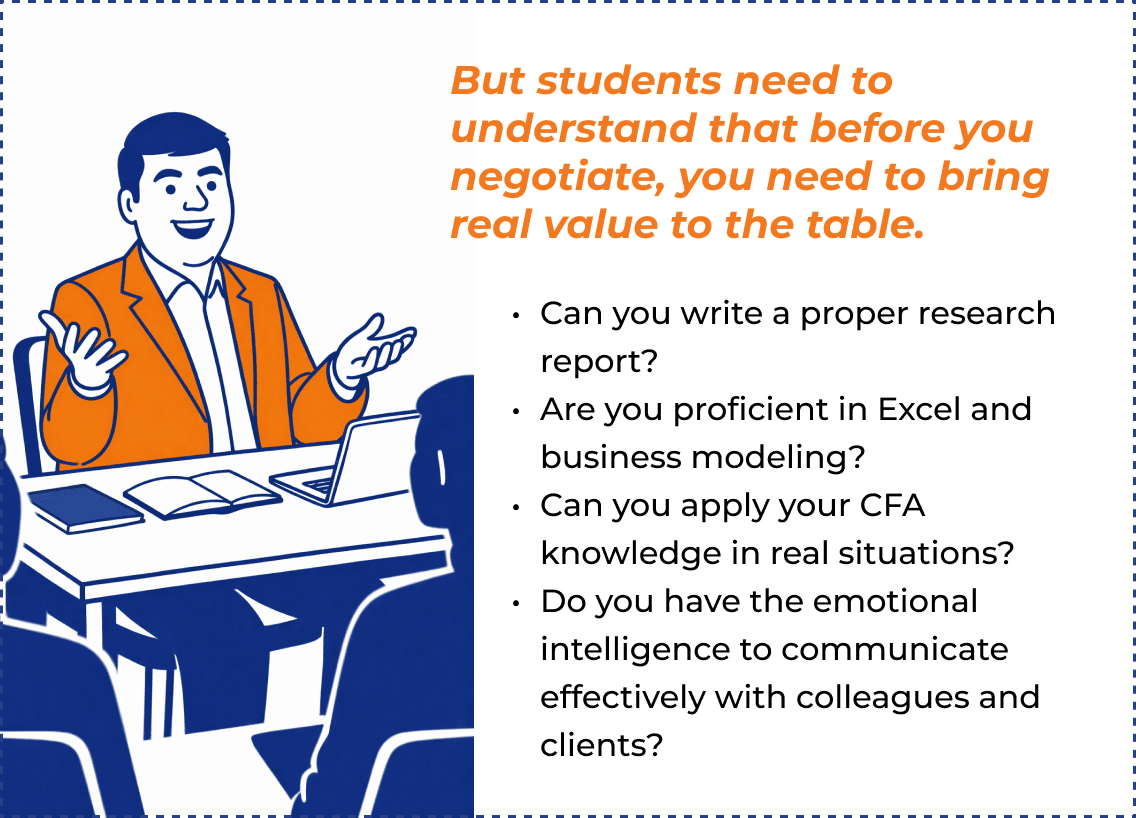
So I decided to address this systematically. I guide students on salary negotiation, but not before I ask them to level up on their end and have a hundred percent of their homework done. Then we discuss negotiation based on industry standards, location, profile, company, and learning opportunities.
The Salary Expectations Trap

This is where most students mess up. The interviewer asks, "What's your expected salary?" and you have no idea what to say. If you say too high, they might reject you. If you say too low, you're leaving currency on the table even if you score the offer.
What I teach students to do:
First, you need data. Not guesses, actual data. What are people with your qualifications actually making in the market currently? Again, these depend on location, type of industry - Commercial Bank, Investment Bank, Fintech, Startup, etc.
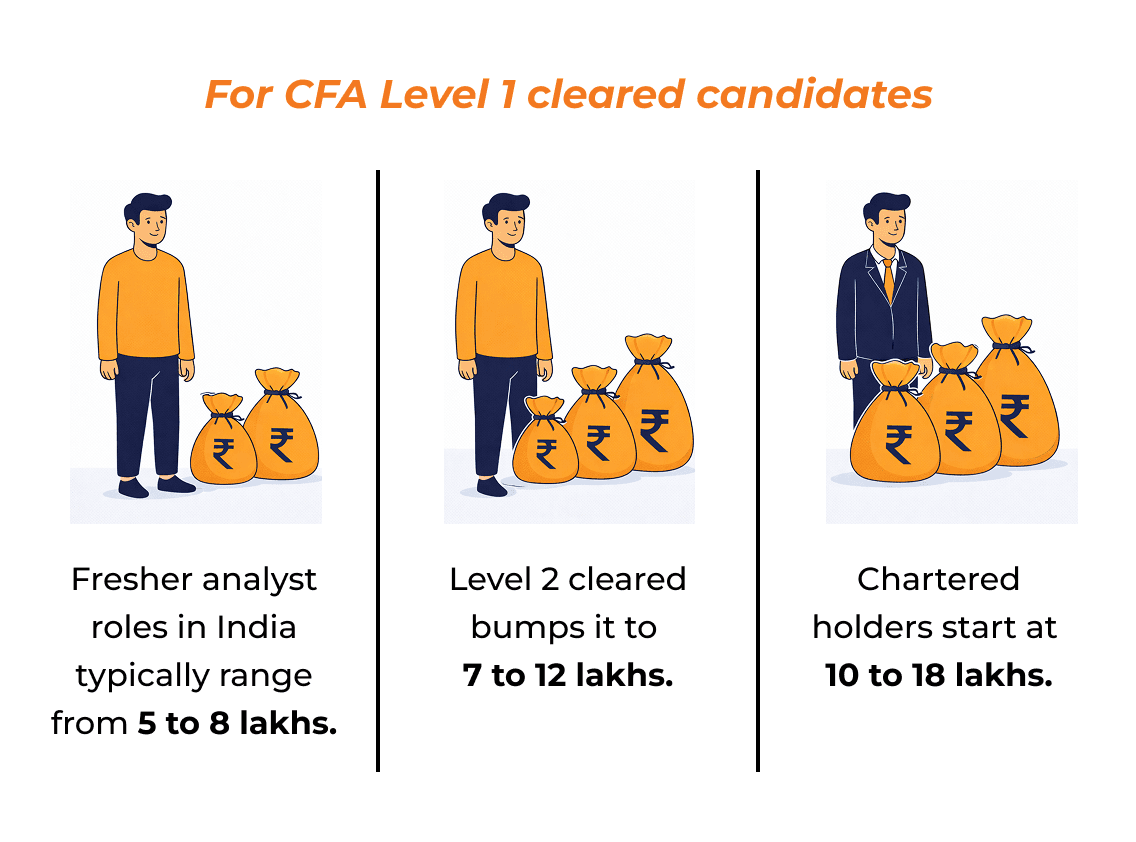
Second, you need to understand your leverage. Fresh graduate with just CFA Level 1? Low leverage. Three years of experience plus charter? High leverage. They need you more than you need them.
Third, you need to separate base salary from total compensation. Some companies lowball base but have handsome bonuses. Others have a high base but no bonuses. Stock options look good on paper, but might be worthless. You're comparing apples and oranges if you just look at one number.
What I tell students to say:
"Based on my research, roles like this typically range from X to Y. Given my specific location, existing experience, profile, qualifications, and the specific requirements you've mentioned, I'd be looking at the Z to W range. But I'm flexible based on the complete package, especially learning opportunities, and how this aligns with my long-term career goals. In the AI-driven world, it's crucial to stay relevant in the industry, and the learning aspect of this role is very important to me."
The Negotiation Nobody Teaches You

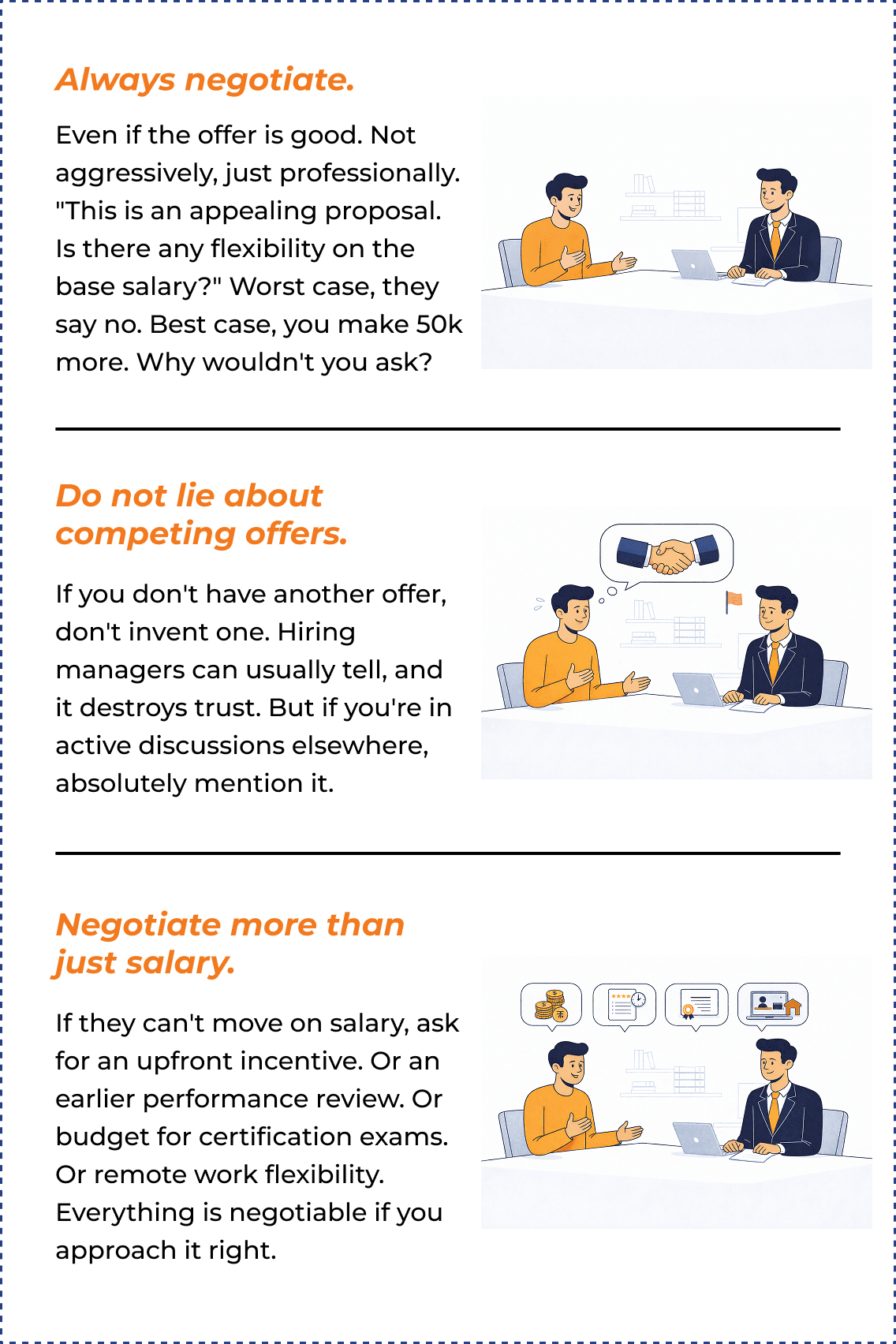
Most people think it's about being aggressive or playing hardball. It's not. It's about giving the company a reason to pay you more while making it easy for them to say yes.
Bad negotiation: "I need at least 10 lakhs, or I'm not interested."
Good negotiation: "I'm really excited about this role. Based on my Level 2 clearing and my previous internship experience, I was hoping we could discuss the possibility of starting at 8.5 instead of 8. Also, what would be expected of me to perform at a higher level in this role? And would it be possible to structure the variable component in a way that if I achieve specific personal KPI's, such as X, Y, and Z, the variable pay could be increased? I'm confident in my ability to deliver results. Would that be possible?"
What's the difference? The first one threatens. The second one asks. The first one makes the hiring manager defensive. The second one invites them to solve an issue together.
What We're Building

We're working on comprehensive resources to help students navigate these conversations:
- Salary Calculator: See personalized salary estimates based on your location, experience, qualifications, and industry.
- Career Guidance: Fill this out if you want personalised advice on your specific situation.
- Podcasts with Industry Experts: We regularly add conversations with professionals on YouTube to give you real-world insights.
- Interview Preparation Resources: We're developing detailed content on interview strategies, personal interview preparation, and negotiation scripts.
- Market data for different roles and levels: Actual numbers across different locations, not vague ranges.
The Bottom Line
Over the years, I've guided students across different countries, cities, and roles. One big thing I've learned: a job decision isn't just about salary.
What really matters is where you want to be 5-10 years from the present. If an offer is around 15-20% up or down from your expectation but gives you strong learning and long-term growth, it's usually worth taking. Career direction matters more than squeezing an additional rupee.
In my classes, I teach more than finance & commerce, that's why we say #MentorForLife. Emotional intelligence, clear communication, and confidence matter a lot. Know your worth, build real skills, and learn to communicate your value professionally.
Until next week,
Aswini Bajaj