The patterns I saw mirror exactly how people handle career pivots. Some panic, some adapt, some thrive.
Let me show you what airports teach about building a career.

The Direct Flight vs Layover Dilemma
Some travelers book direct flights always, even if they're more expensive. Others deliberately choose flights with layovers because they're cheaper or give better connection options.
Neither is wrong. They're just optimizing for different things. I see something similar in how students approach their careers and education.
The actual route that works:
Others sit for professional exams like CAT. Might take a couple of years to secure admission into the topmost colleges. Meanwhile, they're working and gathering experience alongside.
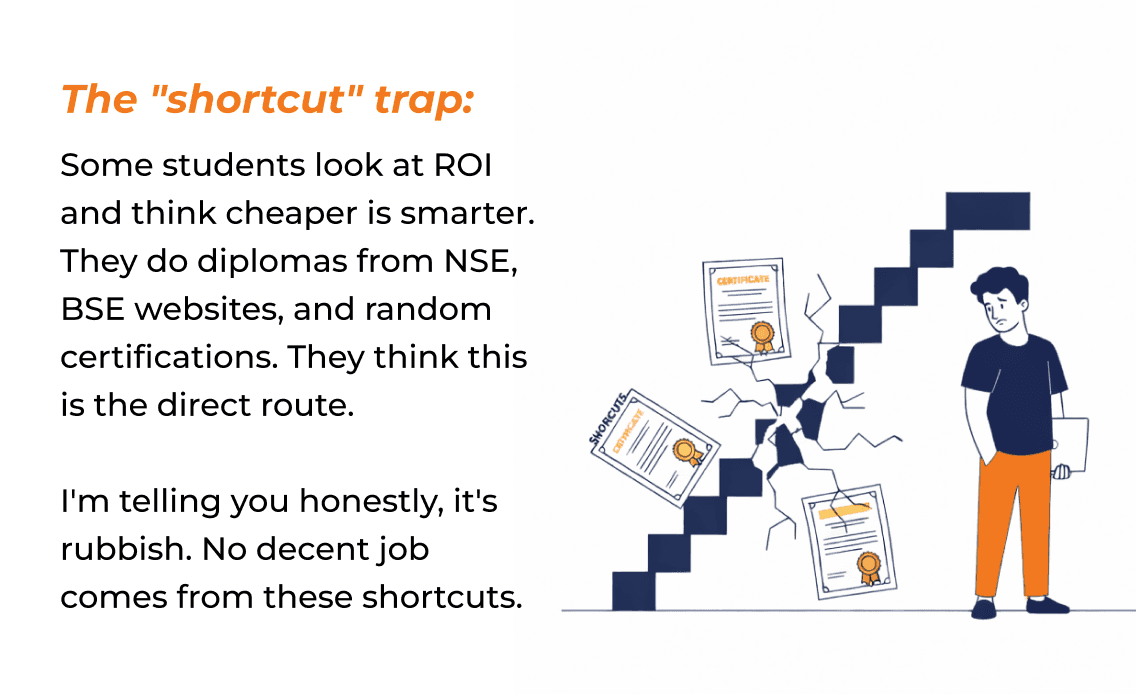
The "direct" shortcut becomes a bad start if course quality isn't good, if your profile isn't strong, or if you're not learning and working hard.
A lot of students don't even know what's in MBA, what's in CFA, what's in FRM, what's in CA. They start without proper information. That's not how you decide. They end up taking the wrong flight entirely.
When Your Gate Changes

You're sitting at gate 23. Boarding starts in 30 minutes. You've got your spot, you're settled. Then the announcement comes. Gate change to 47. That's on the other side of the airport.
Watch what happens. Three types of people:
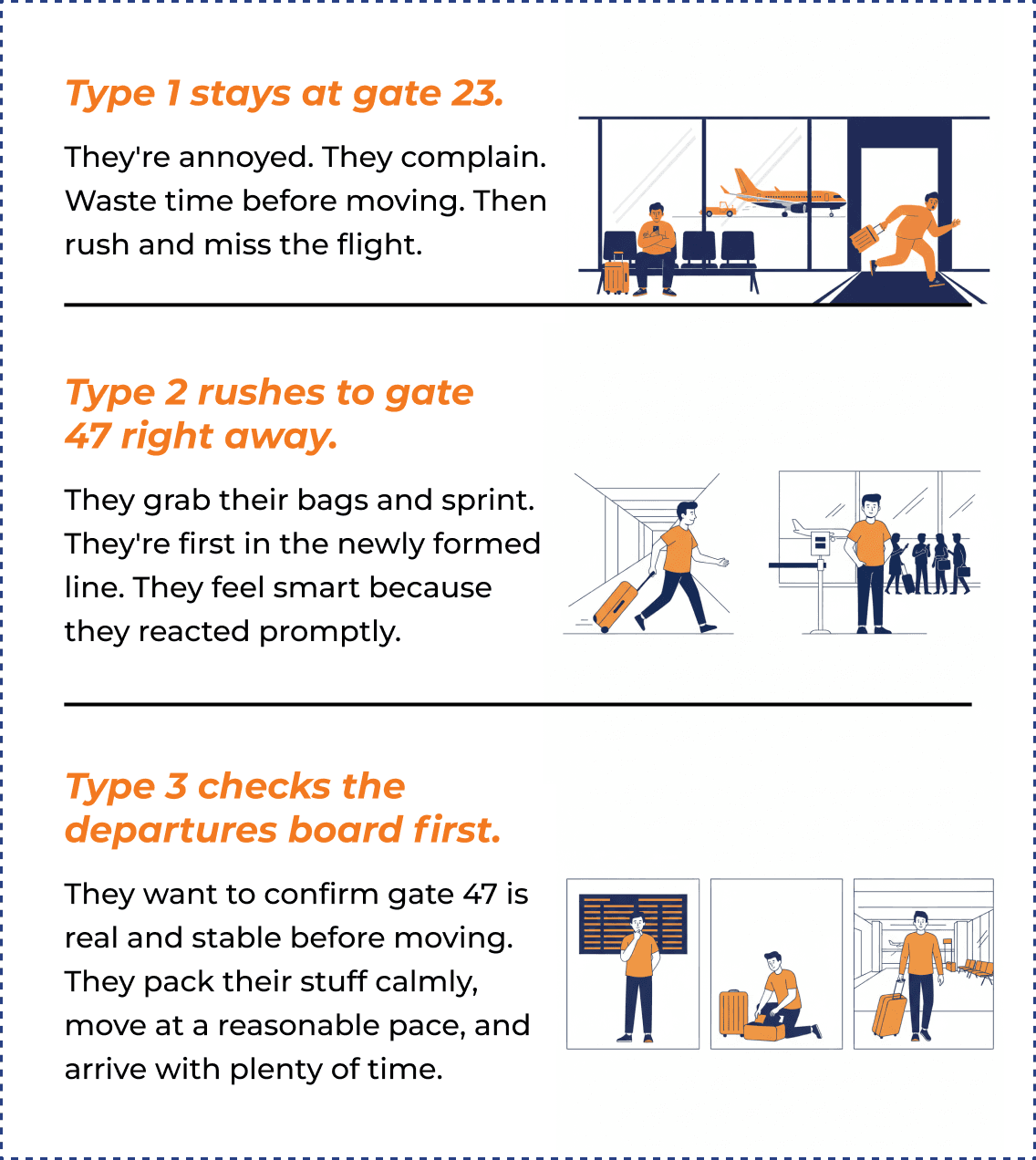
Career pivots work exactly the same way. I've seen students do each of the three:
Type 1 students complain about change. They focus on things they can't control, don't upskill, don't learn, and don't adapt. Eventually, this becomes their biggest limitation.
Type 2 students stay at the surface. They sound smart and talk about many things, but without technical depth. It feels good short-term, but it doesn't sustain a long-term career.
Type 3 students focus on what truly matters. They identify which skills to learn first, then build depth step by step. They work on controllable factors, combining concepts, technical strength, and interpersonal skills; this is what creates real career growth.
The students who pause, evaluate what's important, and prioritize learning properly are the ones who build successful careers.
The Missed Connection Reality

You book a flight with a tight connection. 45-minute layover. Should be fine, right? Then your first flight is delayed. You're going to miss your connection.
At that point, you have choices. Throw a tantrum at the airport. Demand that the airline hold the plane for your benefit. Blame everyone. Or you can start looking at alternatives straightaway. What's the next flight? Can I reroute through a different city? What's my backup plan?
The reality is your original plan is dead. No amount of anger brings it back. The sole question is how quickly you move from "this isn't fair" to "what's my next move?"
I've seen students plan their careers very rigidly. I always tell them to work towards their plan, but revisit it every six months to one year.
Based on how your exams have fared, what fresh information you have, what maturity and understanding you've developed about yourself, and what you like and don't like, you should keep upgrading and updating your career plan.
Most students haven't worked in any profiles yet. They don't know what each role involves. But before experiencing anything, they want to decide and lock themselves in.
The objective is to reach the right destination. Even if you miss one connection or haven't booked your next flight yet, it's absolutely fine. Once you reach one destination, you book the other flight.
You don't need to plan the entire journey from day one.
What This Means For Your Career

- Know your flight strategy. Are you taking direct flights or layovers? There's no right answer, but you need to know which one you're doing and try not to judge yourself by the other standard.
- React to gate changes intelligently. Verify the board, confirm, and move deliberately.
- Handle missed connections with speed. Feel the disappointment for exactly one day. Then start working on alternatives. Your original plan is dead. What's the next best option?
The Bottom Line
Eight hours stuck in an airport taught me that travel chaos and career chaos work exactly the same way. You face delays you didn't expect. Plans change at the last minute. Sometimes you miss your connection through no fault of your own.
Your career will have layovers, gate changes, missed connections, and tight security lines. Your job is to see how well you handle them, like the experienced traveler or the first-time flier.
Until next week,
Aswini Bajaj