Then I walked into class and taught options pricing for 3 hours. Students think I'm being philosophical. But NO, I'm actually being practical.
On one of the weekends while teaching derivatives, a student raised her hand and asked something sharp.
"Bhaiya, if we can't predict premia, why do we pretend these models tell us anything?"
I told her about Arjuna.


What Arjuna and Options Trading Have in Common
Imagine the battlefield of Kurukshetra. Arjuna faces an impossible situation. His teachers, uncles, and cousins are on the other side. If he fights, people he loves die. If he doesn't, his duty fails and chaos follows.
He freezes. Completely overwhelmed by uncertainty. Same issue - how do you decide when you can't see the future?
What Krishna Actually Said

Krishna's answer changed everything for Arjuna and for how I understand risk. Krishna tells Arjuna something powerful.
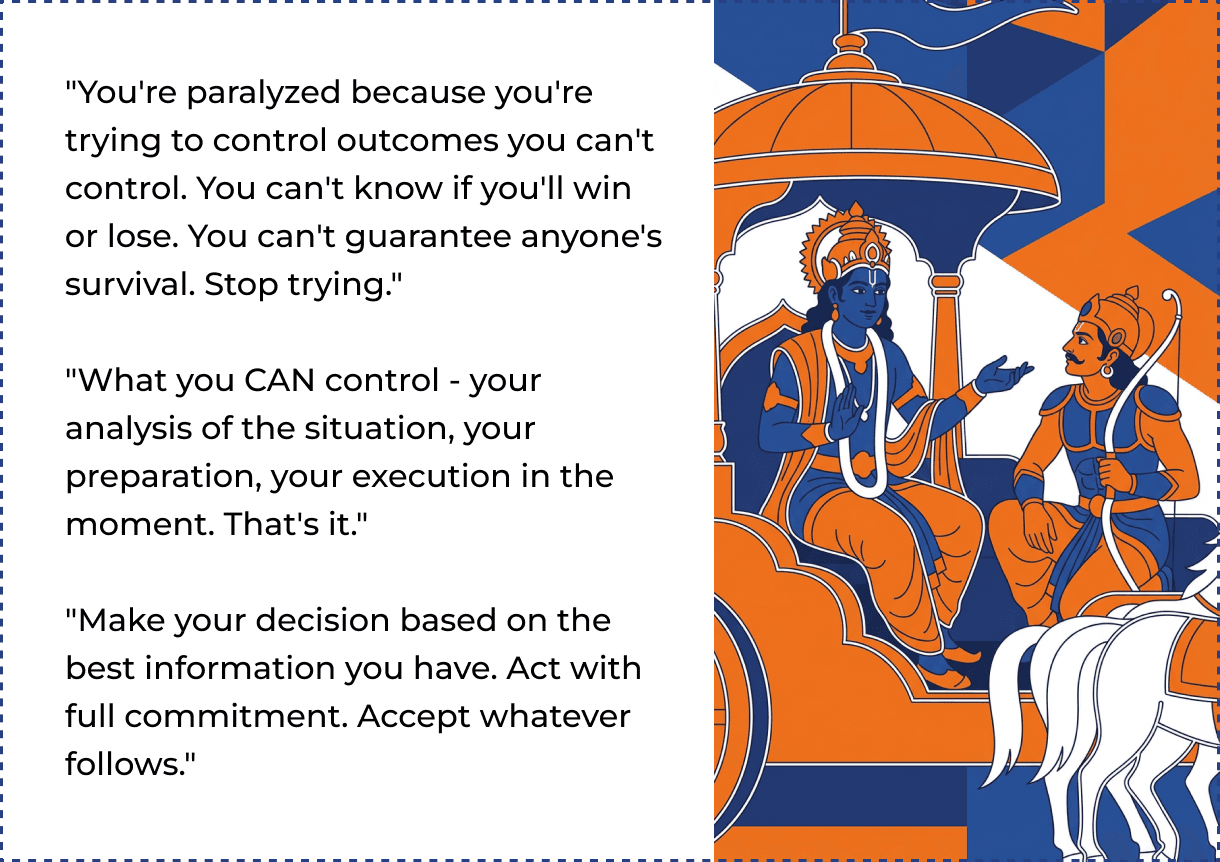
Read that again, but replace "Arjuna" with "trader" and "battle" with "position." That's literally how options work.

The Three Gita Principles for Risk Management

Principle 1: You Cannot Eliminate Uncertainty, Just Understand It
Black-Scholes doesn't predict option value. It gives you a probability-weighted expectation based on assumptions. The Gita says the same - you can't know the future, you can understand the present deeply and function based on that.
Every trader who thinks they've eliminated risk is like Arjuna thinking he can ensure no deaths in war. The goal is informed operation despite uncertainty.
Principle 2: Position Sizing is About Accepting Loss
Why teach position sizing? Not to steer clear of losses. To survive losses when they inevitably happen. The Gita is blunt about this - in any function, there will be consequences you don't like. The warrior accepts casualties. The trader accepts losing positions.
What matters is whether you can continue after the loss? Value at Risk doesn't prevent losses. It tells you how much you might squander, so you can size positions you can survive. That's Gita thinking applied to modern finance.
Principle 3: Detachment Isn't Indifference, It's Clarity
Students misunderstand detachment. They think it means don't care. Wrong. Detachment means caring deeply about analysis, but don't let emotional attachment cloud judgment.
Emotional attachment in a losing position makes you hold too long, double down, or freeze. Detachment lets you assess reality clearly and make the rational next decision.
That's why the better traders sound emotionless. Not because they don't care. Because they're detached from ego.
What This Means For Your Career

I've always taught derivatives not just as formulas and memorization, but with application and derivation of the formulas. This is how I've always incorporated it - connecting concepts to real decision-making under uncertainty.

These are ways of thinking about risk that ancient wisdom and modern finance both teach.
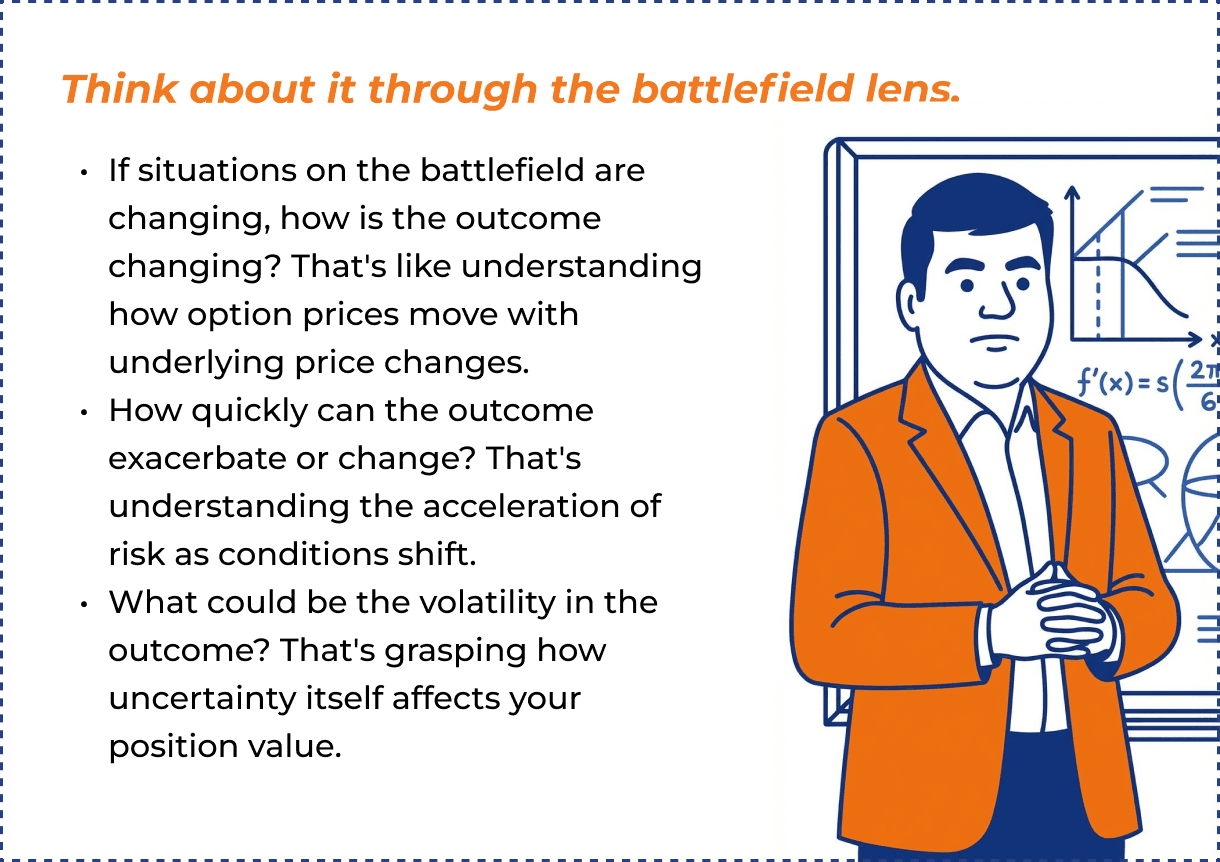
On CFA exams:
Levels 2 and 3 test if you can apply yourself to determine an optimal answer with the information given. There's a distractor in the options - if you make a mistake in your analysis, you'll likely choose the incorrect option. The questions are very precise, testing your application.
Yes, calculations like Black-Scholes can come in exams. But beyond that, they're testing whether you can analyze and apply concepts properly.
Beyond exams, in actual work:
In the exam, the question gives you every variable. In reality, you have to find those data points too. Then, based on that, you make a decision. That's why concepts become very important, not just formula memorization.
No client just asks you to calculate Black-Scholes. Software does that. They ask things like "Given current conditions, should we hedge? How much?" That's a battlefield question with no flawless answer, just informed judgment based on your understanding.
Don't wait for certainty, which will not come.
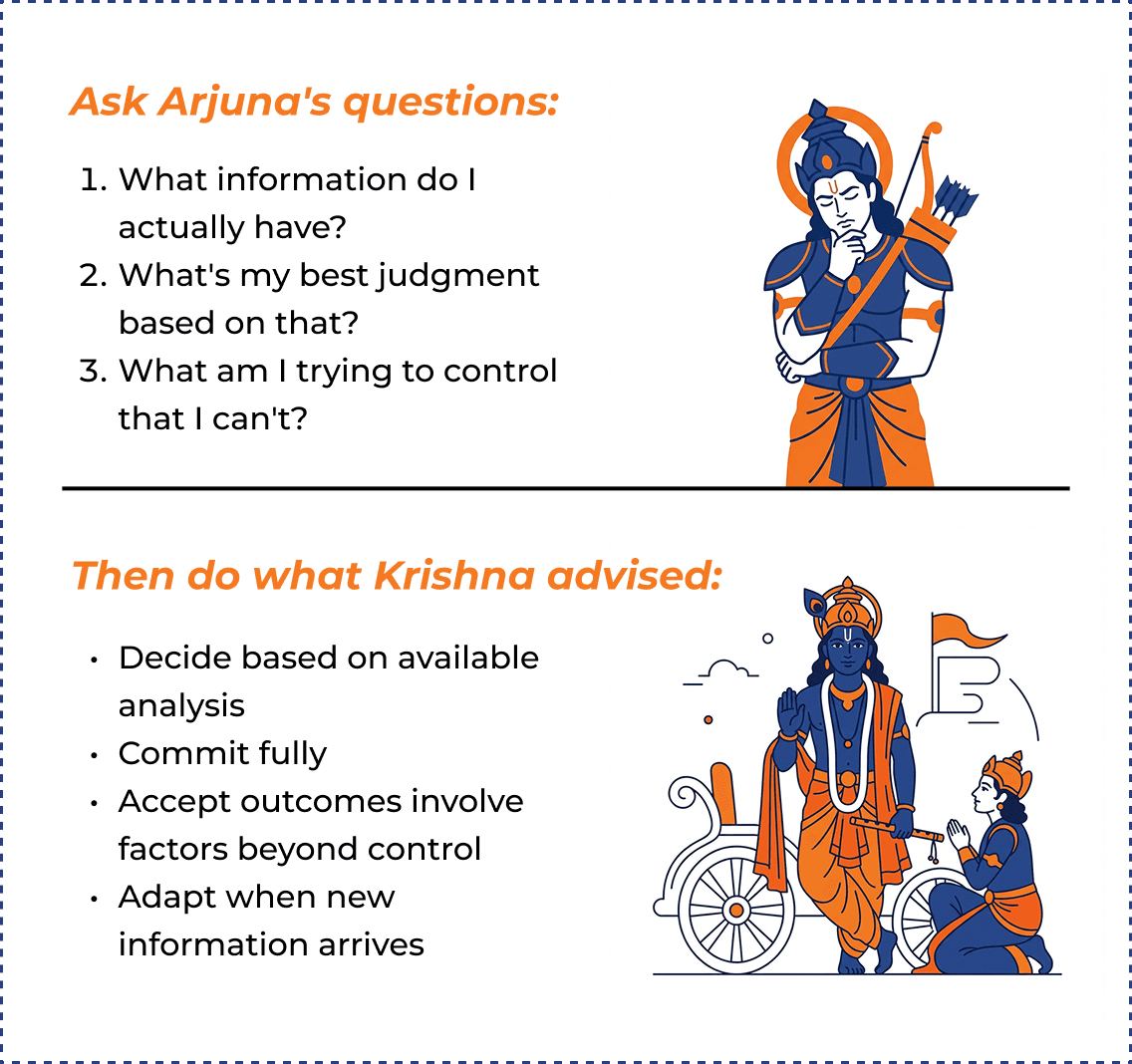
Try This

Next time you face uncertain outcomes:
The Bottom Line
That's the Gita. That's risk management. That's how you build a career.
Until next week,
Aswini Bajaj
Leveraged Growth