They spotted something nobody else saw, put their money in, and years later everyone goes, “Wow, what a call.”
But there's a huge chunk of that story we usually skip.
What did they do after buying it?
Because it's not like you buy a stock and wake up the next morning rich. People around you are making money somewhere else. And you're sitting there thinking, “Did I just mess this up?”
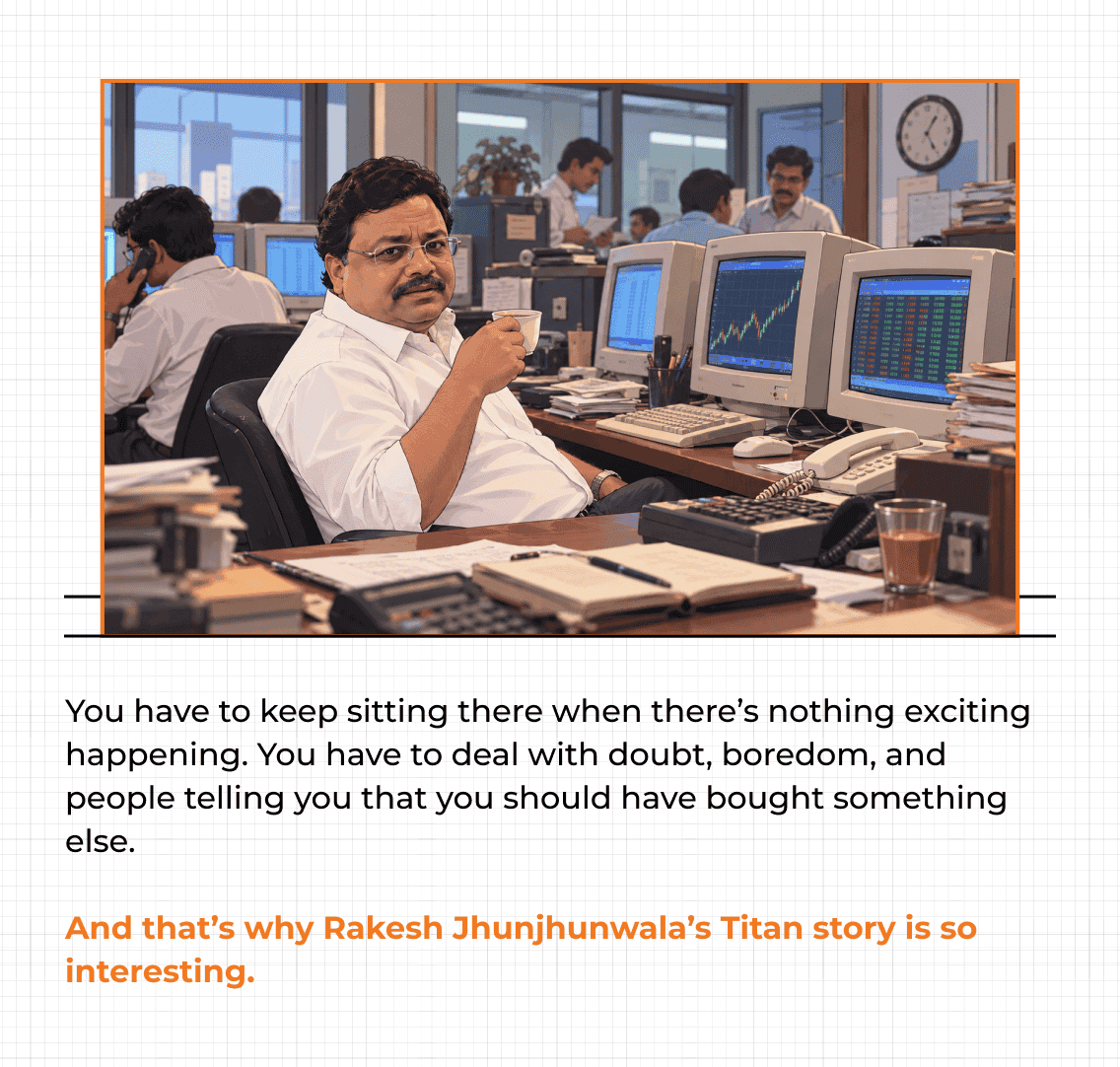
The big buy gets all the attention. I'm much more interested in what happened after he bought it.
The Trade Everyone Doubted
Around 2002–03, Rakesh Jhunjhunwala started buying Titan at around ₹3 a share.
It wasn't some obvious “this company is going to be huge” situation back then. The numbers weren't exactly exciting, some big investors were selling, and a lot of people thought he was making a bad call.
But Jhunjhunwala saw something different. He believed Tanishq could become a major name in India's jewellery market, and that Titan could eventually become much bigger than just a watch company.
Then came the really hard part.
He waited for about 20 years.
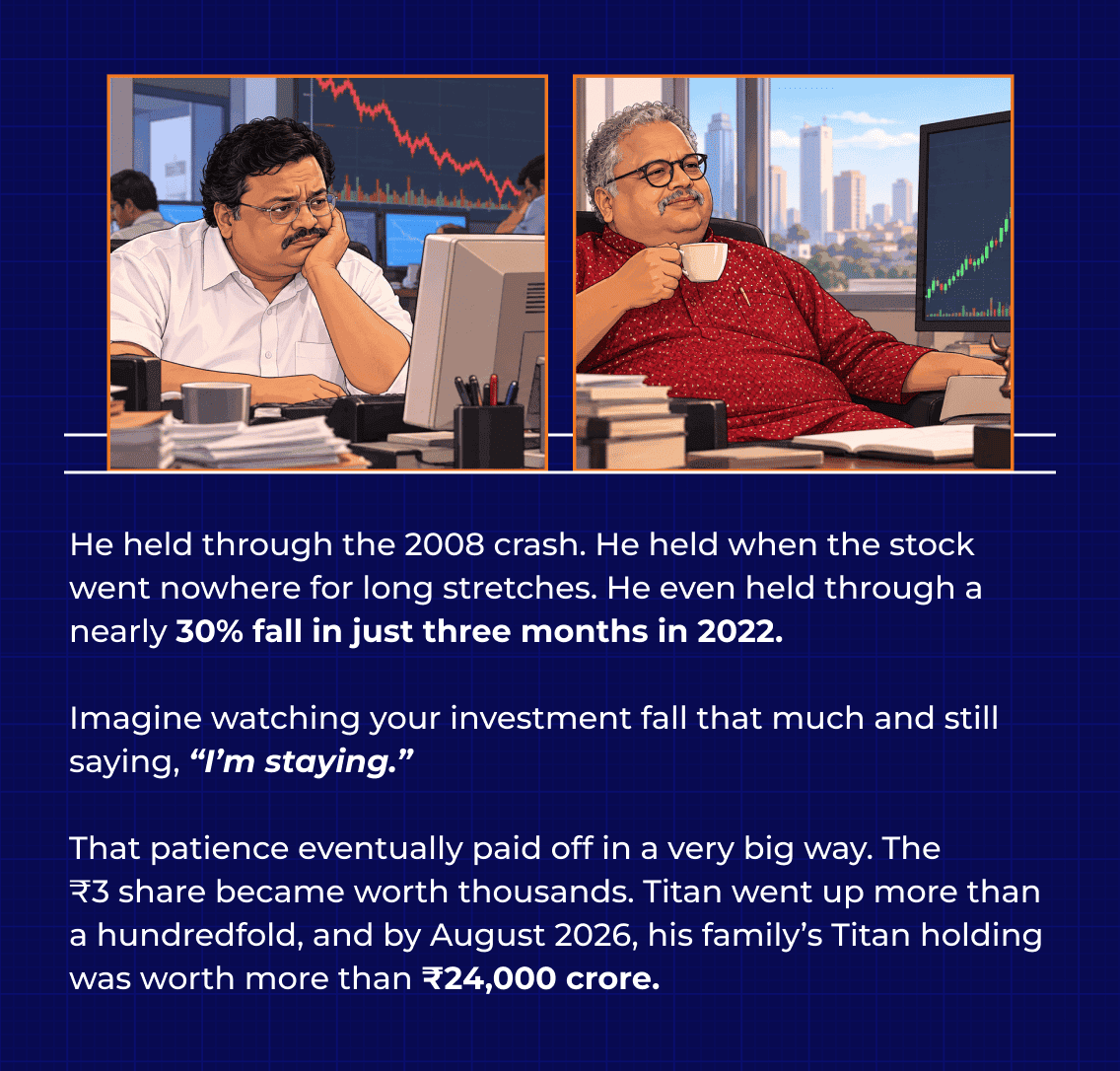
Jhunjhunwala passed away in 2022, but the Titan investment he built continued.
Patience Is Not the Same as Doing Nothing
I think we get the word “patience” wrong quite often.
You can't just sit around, do nothing, and call it patience. Jhunjhunwala could hold Titan for twenty years because he knew what he owned. He had spent years understanding the business, so a bad quarter or a falling stock price wasn't enough to make him run.
That's a very different kind of waiting.
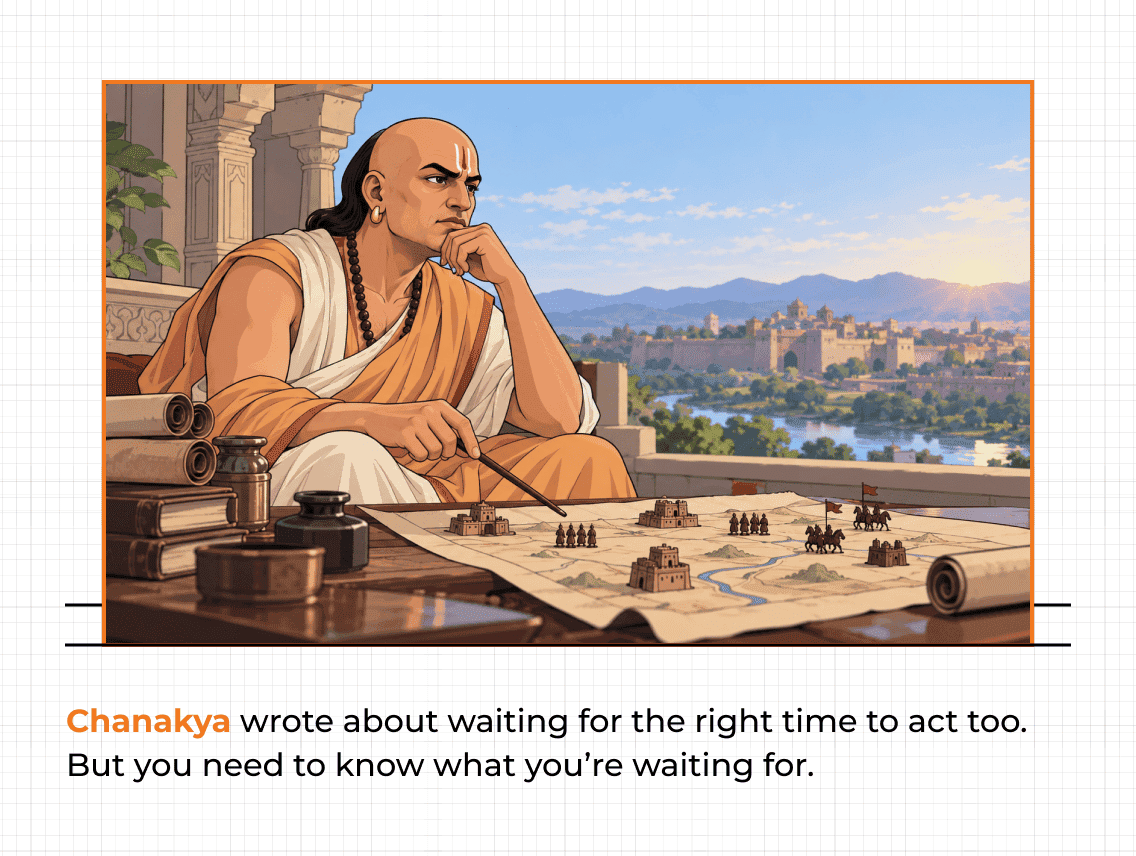
Real patience usually has something happening underneath it. You're learning, practising, watching, building, getting better. From the outside, it can look like nothing is happening.
I see this with students too. Someone says they're being patient with their career, but they haven't learnt anything new in months. Another person is spending an hour every day getting better at something, even though there's no obvious payoff yet.
Give them a year.
You'll probably have two very different people standing in front of you.
That's the kind of patience worth having.
Why Are We So Bad at Waiting?
So if patience works this well, why are we all so bad at it?
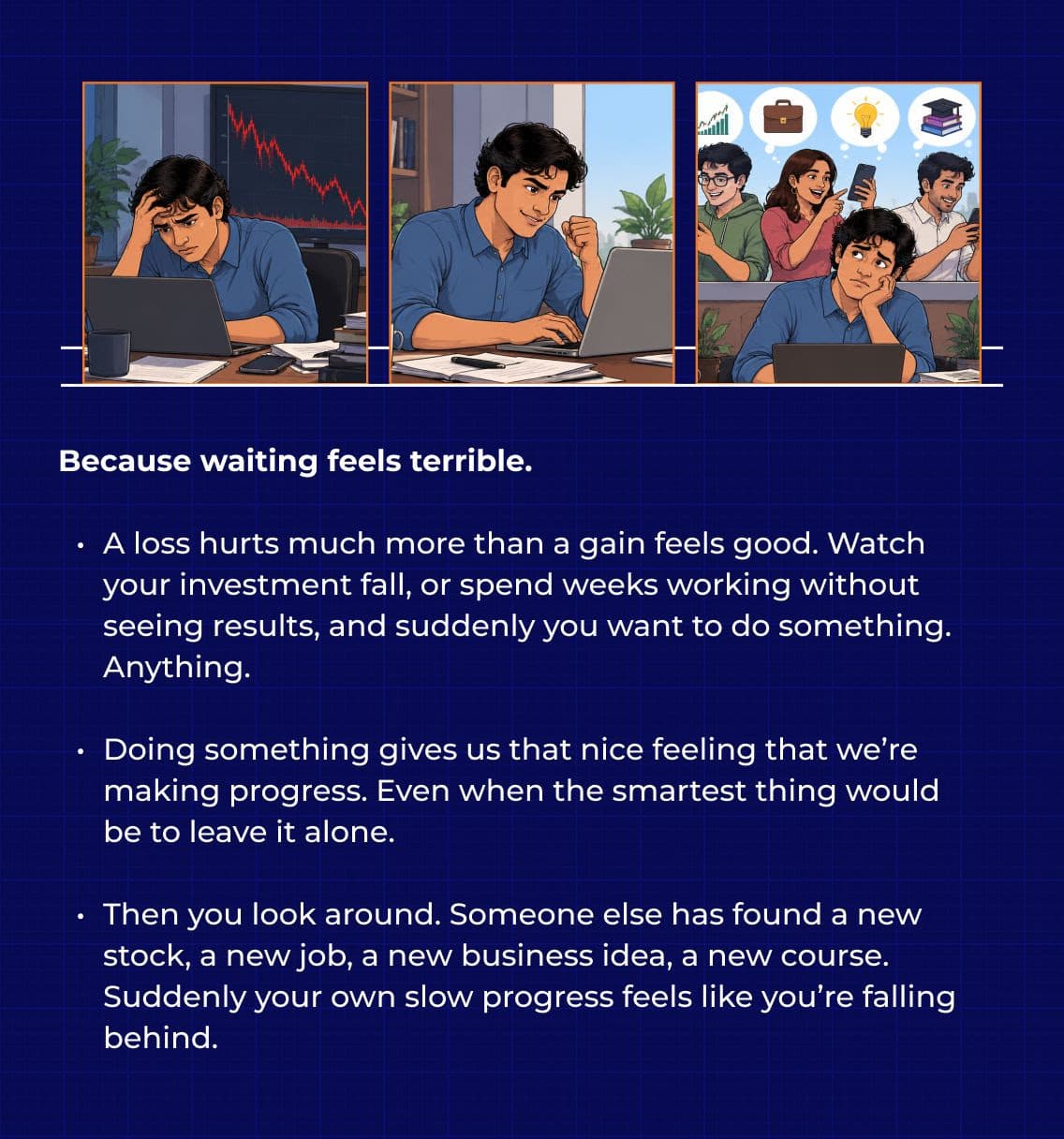
Investors even have a name for one version of this: selling a good investment too early because taking the profit feels safe.
We're just not very good at sitting with uncertainty.
And you see the same thing everywhere.
Someone quits the gym after three weeks because their body hasn't changed. Someone drops a course halfway through because they're bored. Someone leaves a career just before they were starting to get really good at it.
Sometimes the thing you're waiting for really is taking too long. But sometimes you're just stuck in the boring middle.
And that's usually the part that tests you.
But Patience Can Fool You Too
Patience can also get you into trouble.
People held Yes Bank all the way down from around ₹400 to single digits, convinced they were being patient. Others did the same with Jet Airways until the airline stopped flying.
So how do you know which kind of patience you're practising?
Look at what's happening while you wait.
With Titan, the business kept getting stronger. Tanishq was growing, the company was expanding, and the original reason for owning the stock was still there. The price simply took its own sweet time to catch up.
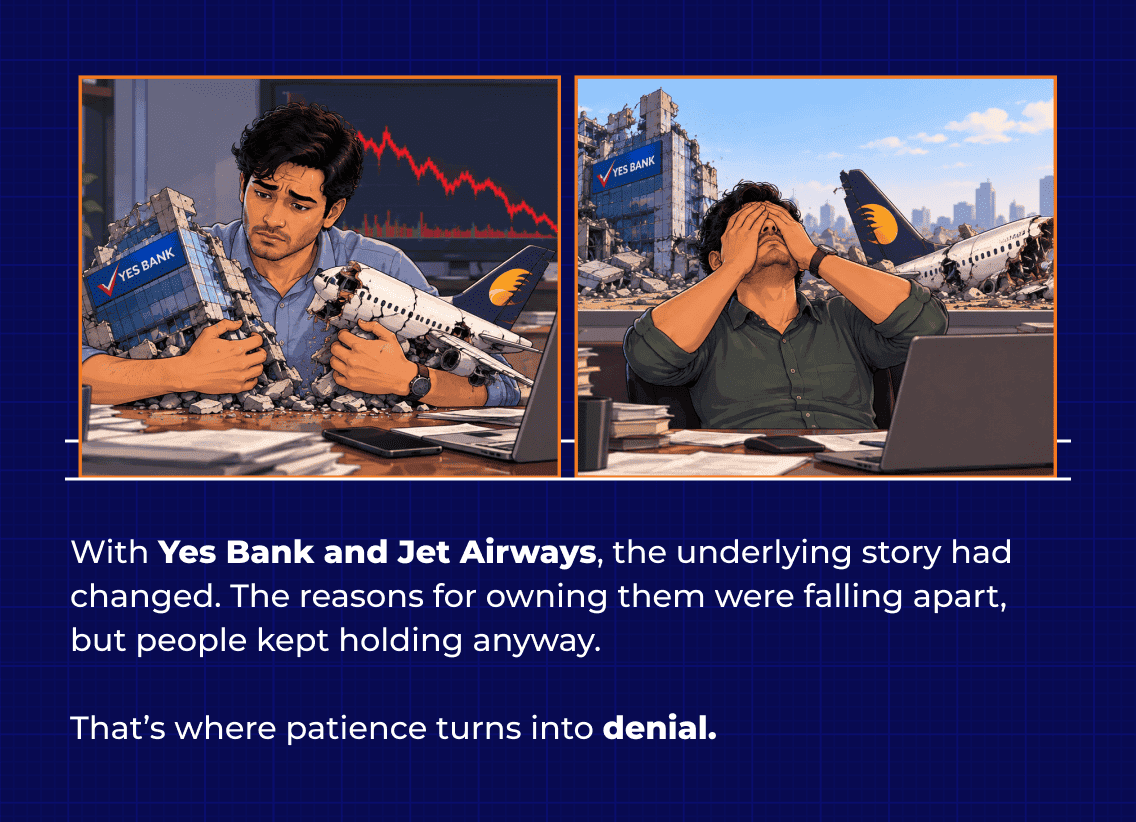
That distinction matters.
You can hold something for ten years and still be wrong.
Real patience needs a reason behind it. You need to keep checking whether that reason is still true.
Start Here
Start keeping a decision book.
This is a simple habit that can help with much more than money.
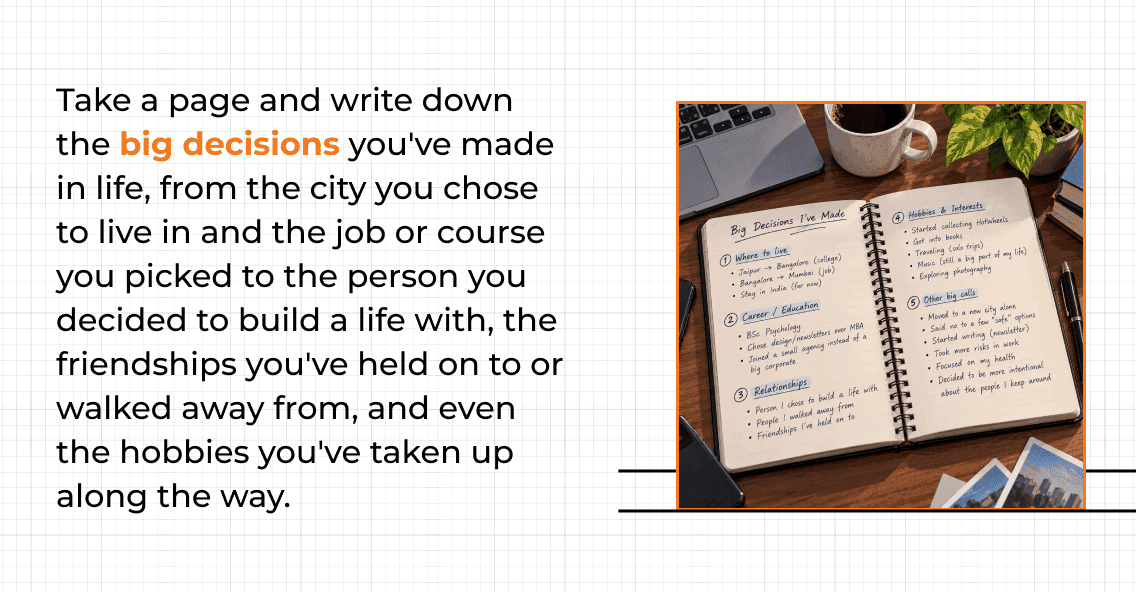
Next to each decision, write down why you made it. What made you choose this? What did you hope to get out of it?
Now comes the important part. Set a reminder to revisit this page every six months.
When you do, read through each decision and ask yourself: does my reason for choosing this still hold true?
Most of the time, it probably will. You'll know why you're still on that path, and you can keep going with confidence.
But sometimes, you'll find that the reason you made a decision no longer holds true. Maybe it changed months ago, but you never stopped to notice.
That's exactly why you keep this book. It helps you see when it's time to rethink something.
It's about staying patient while being honest with yourself.
Here's a small challenge for you.
Complete this sentence in your own words: “I'm betting the next few years on ______, because ______.”
That's your first entry in your decision book. Send it to me, and the person who shares the clearest, most honest answer will win a journal from me.
Invest in yourself,
Aswini Bajaj