There's this fascinating hospital study I read about the checklist approach. They found that a certain percentage of patient deaths could be prevented just by following a simple checklist - making sure nobody forgets critical steps in the chaos. That was very interesting to me.
The way doctors make decisions under pressure is exactly how you should manage your portfolio and career.

The Triage System: Not Everything Deserves the Same Attention
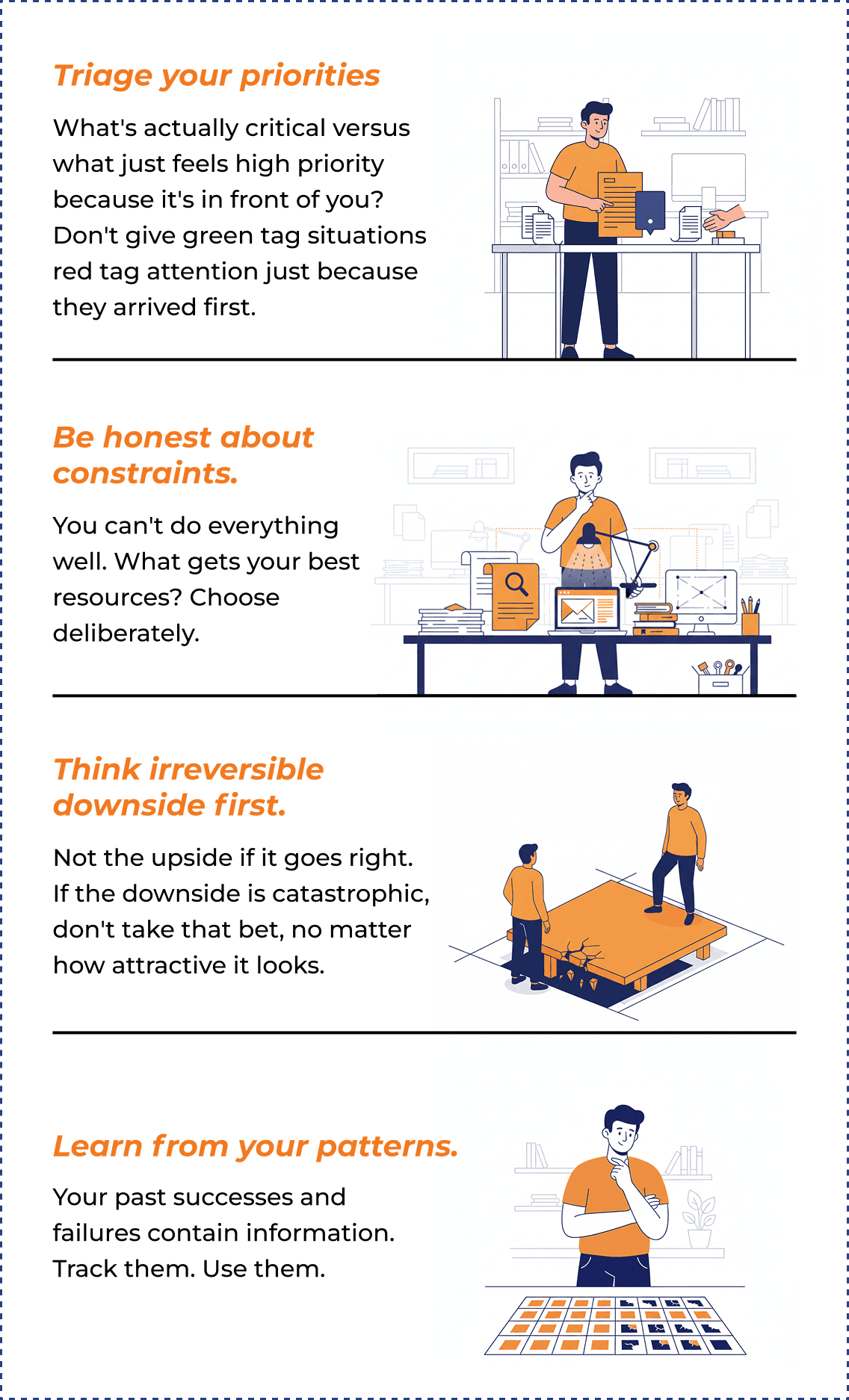
Walk into an emergency room, and there's this system running in the background that most people don't notice. It's called triage. A nurse quickly assesses everyone and assigns priority levels. Red tag means critical, yellow means needs attention but stable, green means can wait.
So, the person who came in first doesn't necessarily get treated first. The sickest person is prioritized.
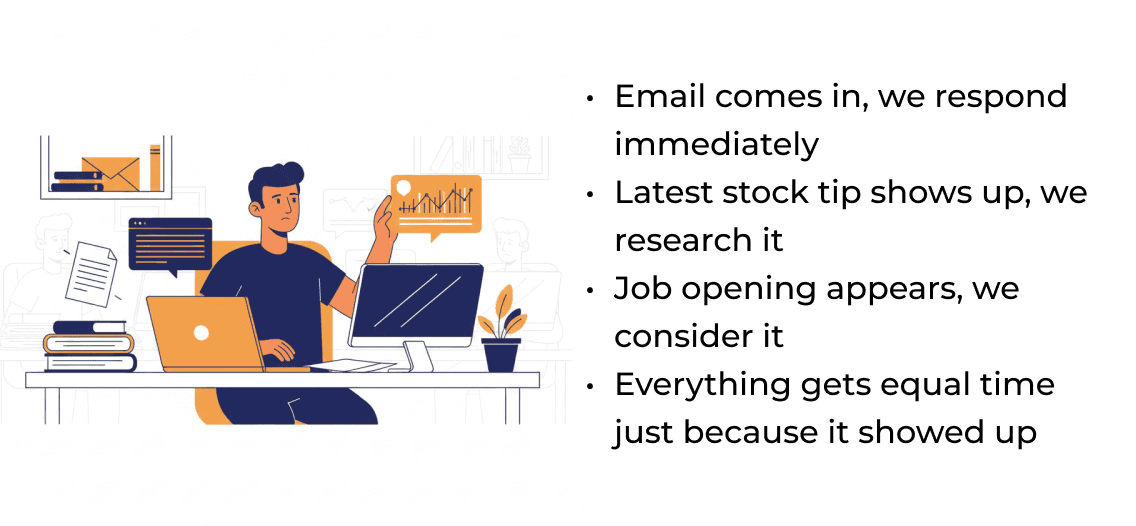
That sounds obvious, but think about how we handle careers and investments. We treat things in the sequence they arrive, not in the order of importance. That's not how emergency care works.
In my teaching practice, I prioritize batches that have fresh chapters or updated things added to the curriculum. Those batches receive additional classes so their syllabus is completed well in advance, giving them time for proper revision.
As a student myself, I learned to batch similar tasks together. When 10 things come my way, I group the same type of work together - it creates flow, saves a lot of time. The non-important or non-priority things get delayed deliberately.
Don't treat everything with equal urgency just because everything feels critical in the moment.
Resource Allocation Under Crisis

Hospitals run on constrained resources. Finite beds, finite doctors, capped equipment. When multiple emergencies come in, someone makes hard calls about where resources go.
I watched one of the doctors on House make a tough but correct decision. Two patients needed the same specialist on the spot. One younger with better recovery chances, one older with complications. The doctor sent the specialist to the younger patient first. That decision wasn't emotional, but it was tough and honest.
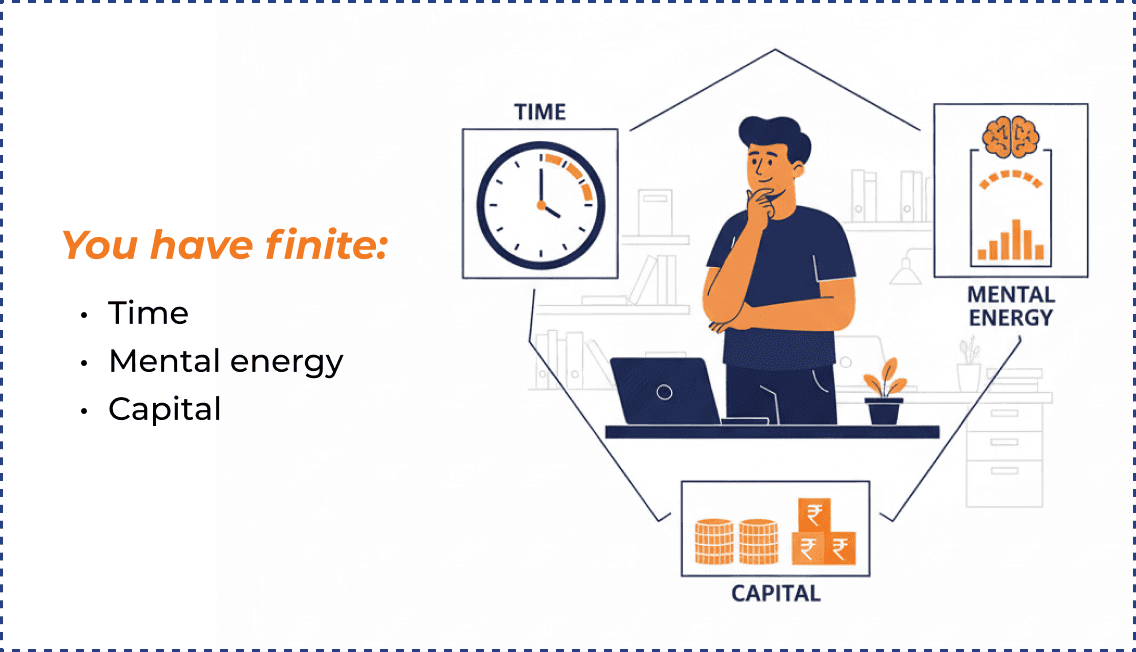
In investing, we pretend we don't have constraints. We tell ourselves we can give equal attention to every stock in our portfolio, every skill we're developing, every opening that comes our way. We can't.
When I was building our team from 50 to 110 people, I had to make similar calls. We had a budget for either more marketing personnel or more tech developers. Not both. I chose tech because we wanted fundamental bug fixes. More importantly, we're launching our new app for students.
That's triage thinking applied to business. What gives you the most positive outcome with resources available, not what feels fair or what you wish you could do.
Irreversible Decisions
In an emergency room, some decisions can't be undone.
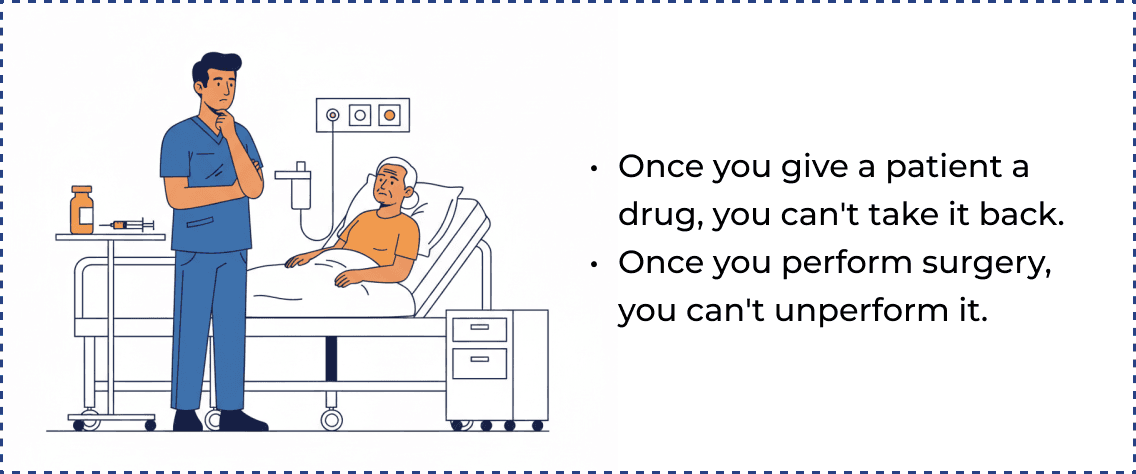
That changes how doctors think about every decision. They optimize for not being catastrophically wrong rather than being right. HUGE DIFFERENCE.
In portfolio management, most people focus on the upside. How much can I make if this stock goes up? Emergency care thinks downside first. What's the worst that can happen if we do this? Can the patient survive that outcome? If no, you don't take that action, no matter how good the upside looks.
I apply this to business decisions now. When we launched the Learn-Mate feature in the app, to help students connect with batch-mates and create real study groups. I'm doing something similar for students who haven't yet made up their minds about their careers. If you're in that category, play the poll below:
Poll: Still not decided what you want as your career?
Getting back to the story - the people you study with today might be the people you build businesses with tomorrow. We could have launched Learn-Mate quickly as a basic matching feature. Or we could take time to design it properly, so connections felt meaningful, not random. We chose the second.
Because we know grades matter. But relationships + knowledge compound far beyond an exam. A rushed feature might have worked short-term. But a well-thought-out one builds trust, community, and outcomes that last. So we delayed, launched perfectly, and got zero complaints. Maybe we lost some early adopters, but we didn't risk the catastrophic downside.
The Pattern Recognition That Saves Lives

Really experienced ER doctors don't run every test on every patient. They've seen thousands of cases. They recognize patterns instantly and treat based on that recognition. They're experienced enough to know what matters.
In teaching CFA, I've developed pattern recognition not just from my own exams but from countless students' exams across 100 countries. This helps me solve their career doubts and guide them properly.
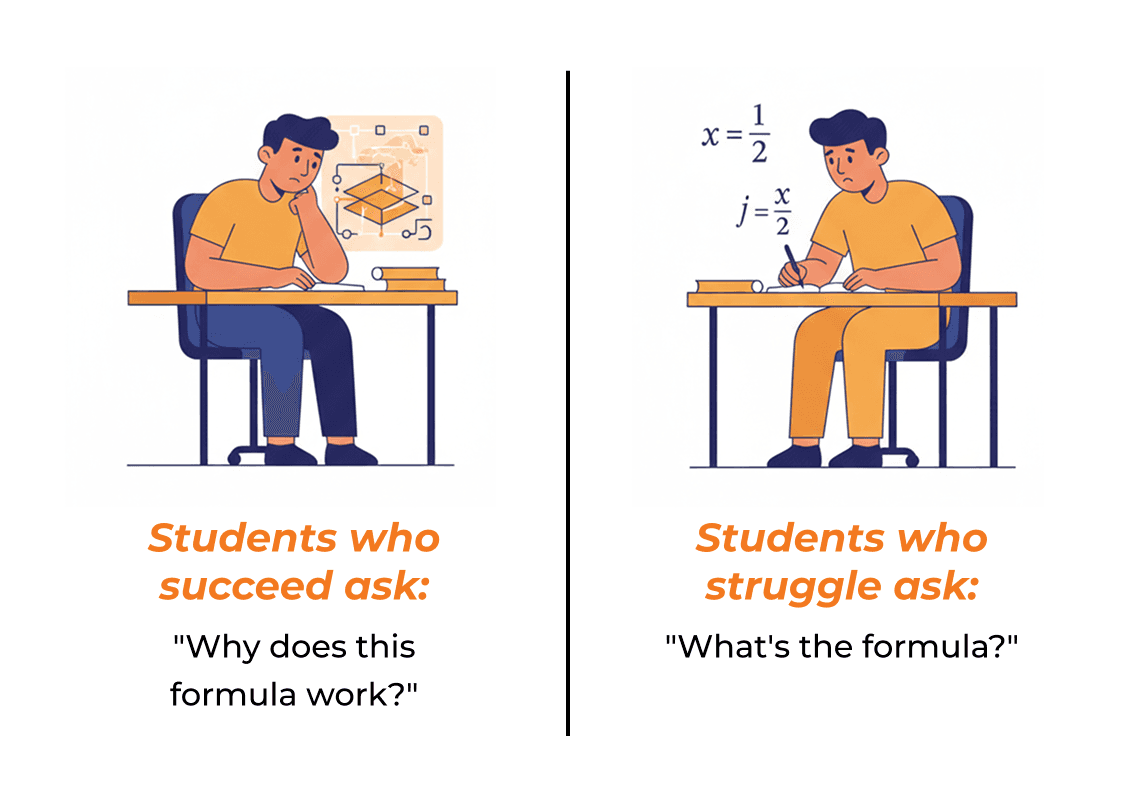
Students who succeed are willing to work hard. Students who struggle or learn after making mistakes are generally the ones who take things lightly, are overconfident, or are not able to manage their emotional quotient well. With guidance, they also come back on track, but after making mistakes and losing precious time.
That question in the first class predicts their entire trajectory. I've seen this pattern hundreds of times. Most teachers don't track this. Most investors don't track their decision patterns either. But patterns exist. If you're not learning from previous decisions, you're not getting better at making them.
What This Means For Your Case

Next time you're looking at your portfolio or making a career decision, think like an ER doctor:
The Bottom Line
Those few hours watching House taught me more about decision-making.
That's good emergency healthcare and good portfolio management, good career strategy, and how you build something that lasts.
Until next week,
Aswini Bajaj