
"You have a right to perform your prescribed duty, but you are not entitled to the fruits of action."
This isn't something that changed how I teach.
This is something I've lived by since I was a student, a principle my parents taught me, that shaped my academic success, and now guides how I mentor students.

The Shloka That Shaped Me

I have an art piece in my office cabin with the shloka Karmanye vadhikaraste embedded in it. Students see it every day.
This is from the Bhagavad Gita. I'm not being secular or vague about it. I want to cite the source. This wisdom comes from the Gita, and I'm proud to say that.
This principle is how I passed 13 degrees on first attempts. How I've taught for 13 years without burning out. How I guide students today.
What My Parents Valued

Growing up middle-class, money wasn't unlimited. International exam fees weren't impossible to afford, but we had to dip into savings. We spent wisely, not extensively.
Even then, my parents never pressured me about results.
What would disappoint them? If I were watching TV before exams. If I were eating out and falling ill. If I were distracted, not studying seriously, and not completing the syllabus. If I wasn't doing MY bit.
That would disappoint them. Not the outcome. The effort.
I'd watch my parents work all day, then read scriptures at night. That value trickled down to me: Focus on your Karma. Not the outcome.
Why I Measure Karma, Not Results
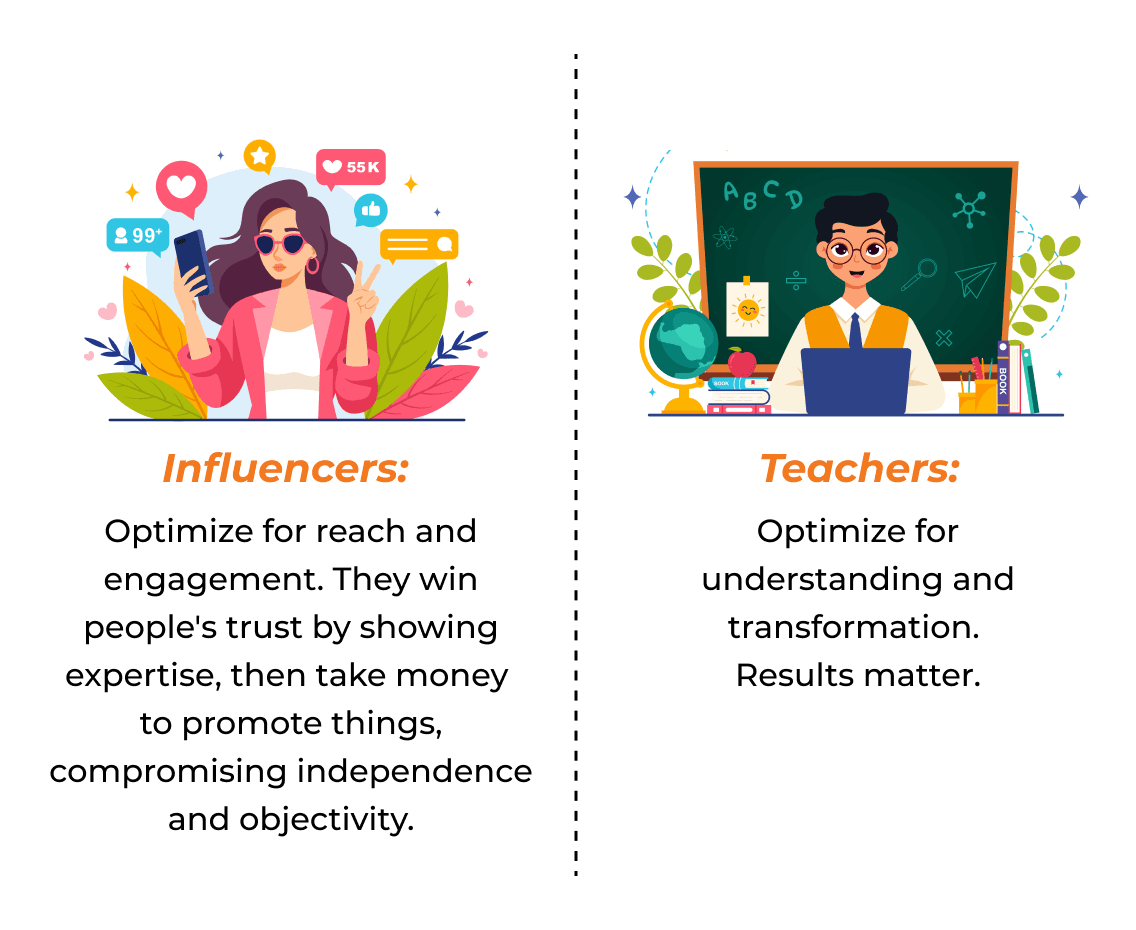
I don't measure success only by pass rates. Never have.
What frustrates me isn't when students fail. It's when they don't do their Karma properly.
During exams, students start calculating, "How many questions did I get right?" Instead of completing the exam, revising, and attempting flagged questions, they're already thinking about results.
They defer exams because of stress about "what will relatives say?" They obsess over exam fees instead of focusing on preparation.
That attachment to outcome makes them worse performers.
The Disappointment Isn't the Outcome

Students tell me, "Sir, I failed. I'm ashamed to face you."
I tell them: “I will never be disappointed with your result. Ever.”
I'll be disappointed if you're partying 10 days before exams, not completing the curriculum, getting obsessed with social media, or not valuing the investment of time and money, yours, mine, your parents', and your family's.
But I won't be disappointed if you did everything right but fell ill, or you're a working professional and a major deal took priority, or something genuinely went wrong.
In those cases, we analyze. We have a detailed introspection form where students answer questions about their preparation. We guide them on what needs to be done.
The focus is always on INPUT. Not outcome.

I remember Nikita from Madhya Pradesh. Exceptionally hardworking. All notes done. She failed.
I told her about Peaks and Valleys by Dr. Spencer Johnson. When you're on a peak and get arrogant, you come down. When you're in a valley and stop working, you'll never go back up.

Another student failed Level 2. He promised himself: "I will work so hard that I'll get 70%+ accuracy in EVERY subject."
And he did. Way above the passing line.
That failure taught him that these are professional exams. You're competing globally now. He was never overconfident again. Never under-prepared. Always over-prepared.
Sometimes, a result not working in your favour is a blessing in disguise.

On the result day, we send all students a WhatsApp message:
Success today doesn't guarantee success tomorrow if you get arrogant.
Failure today doesn't mean failure forever if you keep working.
Why I Stretch My Classes

Students joke: "Aswini Bhaiya, your 2-hour class became 5 hours again."
They're right. Last month, a doubt session lasted three hours. Students had trains to catch.
Why? Because my Karma isn't sticking to schedules. My Karma is teaching when teaching is happening. When questions are deep, when concepts are connecting, that's when I teach.

When I get 20,000 career questions, "Which job?" "Canada vs Australia?" "Merchant banking vs investment banking?", I learn. I understand how students think. Where they go wrong.
I can guide them early. And I learn about different job roles, markets, and industries. My knowledge has compounded over the years.
That's why I do career guidance beyond academics. Seminars across the country. YouTube videos. It's my Karma.
When You Stop Obsessing Over Outcomes

When you stop obsessing over outcomes, your outcomes often improve.
You're no longer paralyzed by fear. No longer cutting corners. No longer anxious and performing poorly.
You're doing it for the sake of it. You're enjoying it. You're learning. There's depth.

Results are a mix of factors: my teaching + students' work + family support + staying healthy + the exam paper itself.
But for that, you need to continuously work. Not daydream. Not having ambition without discipline. Not obsess over the outcome.
Your Takeaway This Week
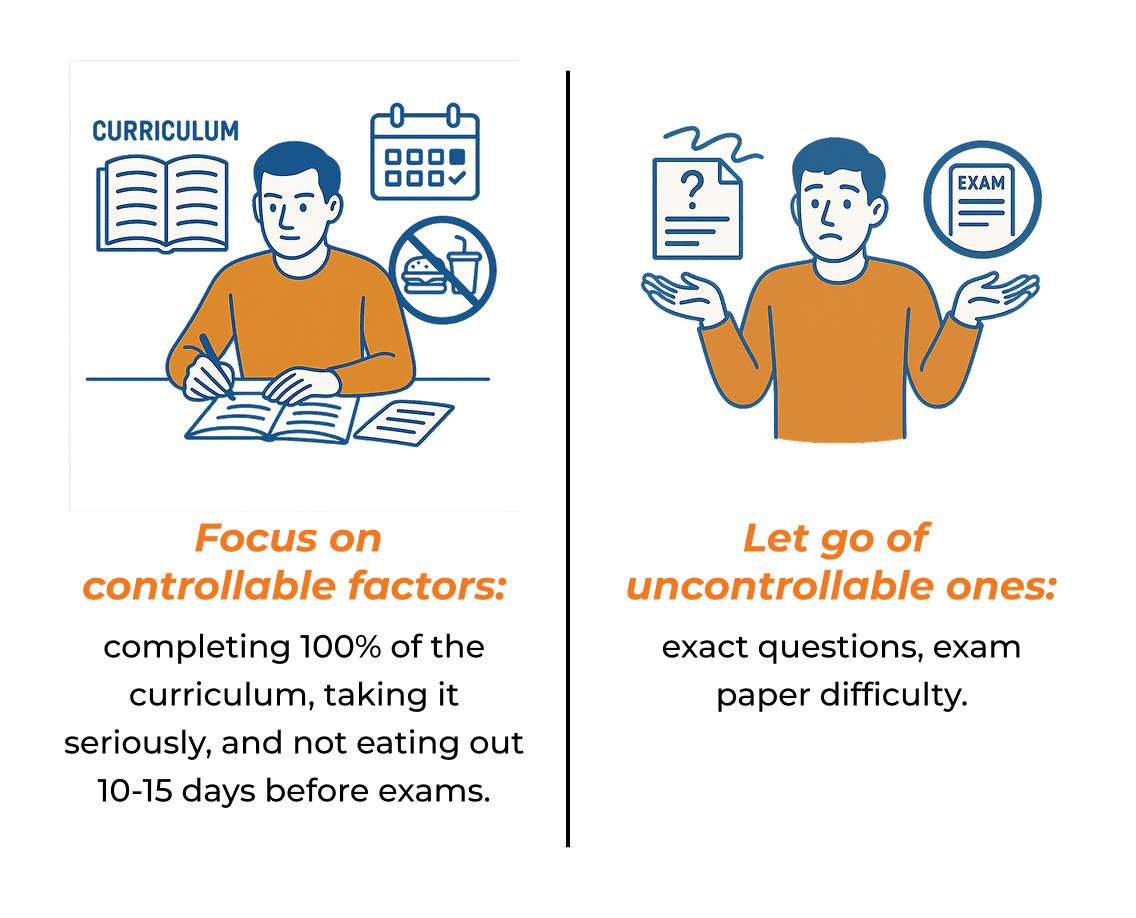
This week, identify one thing you're anxious about.
Example: What if you don't pass the first attempt, but the second? And because of that, you became serious. Started proofreading, cross-checking. Concepts became thorough. You changed your personality.
That "failure" was a blessing in disguise.

The shloka says it clearly: Karmanye vadhikaraste ma phaleshu kadachana.
You have the right to do your work. Not the right to the results.
Do your Karma. The outcomes will follow.
Looking for a mentor who doesn't just teach exams, but builds discipline, clarity, and a career mindset that stays with you for life?
Click here →
Until next week,
Aswini Bajaj